🏠 Home
Home Feng Shui
Traditional Feng Shui has specific guidance for every room and area of your home — from the front door to the bedroom, kitchen, bathroom, staircase, windows, and balcony. 30 in-depth articles.
🏠 Home
Traditional Feng Shui has specific guidance for every room and area of your home — from the front door to the bedroom, kitchen, bathroom, staircase, windows, and balcony. 30 in-depth articles.
Bed placement, headboard direction, colors, lighting, mirrors, and everything else that affects sleep and wellbeing in your bedroom.
The most important bedroom question: which direction should your bed face, and why? Classical Eight Mansions and Form School answers.
Learn mirror feng shui placement rules for bedrooms, bathrooms, front doors, and where classical tradition says never to hang one.
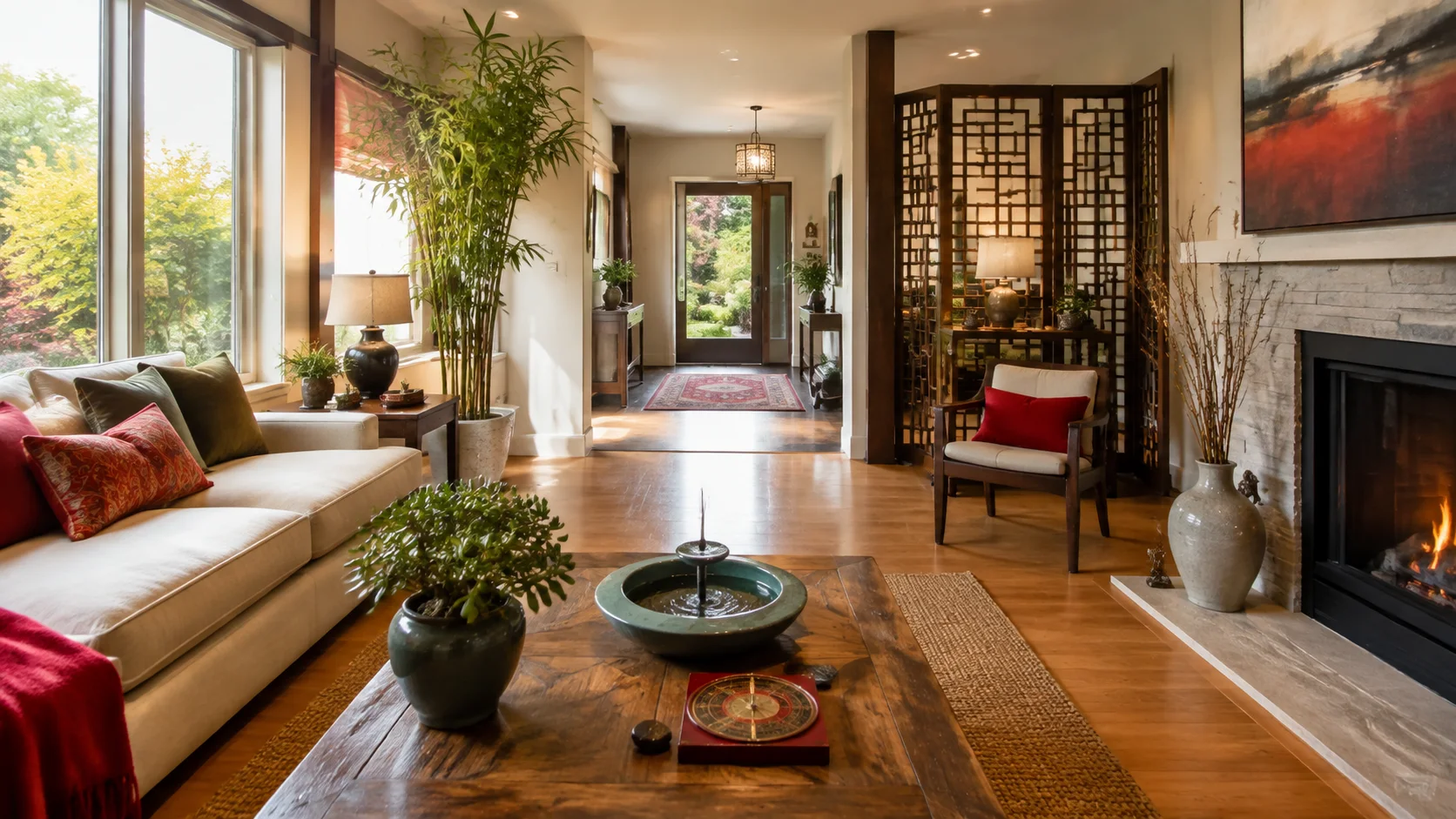
How to arrange your living room for positive energy flow — sofa placement, TV position, lighting, and room direction.
Round vs. rectangular tables, ideal placement, how many chairs, and what traditional Feng Shui says about meal energy.
Why clocks are considered a sensitive Feng Shui element — and the best (and worst) places to display them.
The Feng Shui reasoning behind decluttering — beyond minimalism, this is about energy circulation and fresh starts.
The stove is the most important Feng Shui element in the kitchen. Direction, proximity to sink, cleanliness, and wealth implications.
Rice containers, refrigerators, food storage, and the traditional connection between kitchen management and household prosperity.
The front door is the "mouth" of the house in traditional Feng Shui. Direction, color, obstacles, and the most important entrance rules.
Is it bad Feng Shui when two doors directly face each other? What traditional texts say and how to handle it.
The traditional belief in door thresholds as protectors of household wealth — origins, reasoning, and modern application.
The classic guideline for door and window orientations — what southeast, south, and east doors mean, and which window positions to minimize.
Discover if a west-facing front door is lucky in Feng Shui. Learn effects, cures, colors, and tips to harmonize Metal energy at your entrance.
How to design a commercial entrance to welcome customers and positive energy — from door width to lighting to threshold height.
Which plants are traditionally considered auspicious — and which ones to be careful about. Lucky bamboo, money plant, orchids, and more.
Why fish tanks are considered powerful Feng Shui tools — placement rules, number of fish, species, and the "head-over-water" concern.
Through-door layout, long corridors, missing corners, cluttered entrances — the most frequently encountered home Feng Shui issues.
Why staircases get special attention — and the most important rules for position, design, and what to avoid.
Windows as the "eyes" of a house — orientation, size, cleanliness, and how they affect light, air, and energy.
Four specific layout configurations traditionally associated with career obstacles and financial friction for male householders.
What to check when buying or renting a home, and how to energetically activate a new space when you move in.
How to read a floor plan with Feng Shui awareness — irregular shapes, missing corners, and what to prioritize.
The traditional Chinese approach to clearing old energy and inviting new luck at the start of a new year.