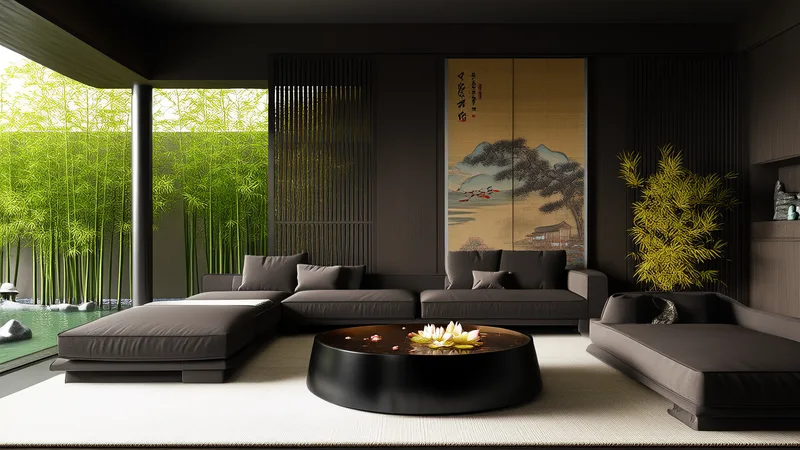
Why Is the Living Room So Important in Feng Shui?
The living room is usually the most active shared space in a home. It is where people relax, talk, entertain guests, spend time together, and decompress from the day. Because of this central role, traditional feng shui treats the living room as one of the most important areas for maintaining the home's overall qi.
Unlike the bedroom — which should be calm, private, and restful — the living room benefits from a balanced blend of warmth, openness, and comfortable movement. It needs to feel welcoming to both family members and guests, stable enough to encourage relaxation, and organized enough that people can actually move and breathe within it.
Keep the Living Room Bright
Traditional feng shui generally favors bright, welcoming spaces. A dark living room may be described in traditional terms as having insufficient yang energy — a lack of the active, warm, social quality that a gathering space requires.
From a practical modern perspective, natural light makes a room feel more spacious, warmer, and more pleasant to spend time in. If your living room is naturally dark, consider:
- Opening curtains during daylight hours
- Using mirrors strategically to reflect natural light into darker corners
- Choosing lighter wall colors that reflect light
- Adding appropriate floor and table lamps for evening warmth
- Keeping windows unobstructed by furniture or excessive decor
- Trimming outdoor plants or removing objects that block window light
Where Should the Sofa Go?
One of the most commonly discussed living room feng shui questions is sofa placement. The classic recommendation is to place the main sofa against a solid wall rather than floating in the center of the room or with its back to an open walkway.
The wall provides what feng shui calls a "mountain" of support behind the seated occupants. People generally feel more secure and comfortable when their backs are protected rather than exposed. Modern interior design agrees with this reasoning: sofas backed by walls create more defined, protected seating areas than those positioned in open space.
Additional sofa placement principles:
- Avoid placing the main sofa where it blocks the primary walking path through the room
- Ensure there is enough space between the sofa and the coffee table for comfortable movement
- The seating area should have a clear view of the main entrance to the room
- If multiple sofas or chairs are used, arrange them so conversation is easy and natural
Don't Block the Main Entrance
The entrance to the living room is traditionally considered an important point where qi enters the space. Avoid placing large furniture, storage boxes, or other obstacles directly in the entrance path.
Even without feng shui, a clear entrance makes a room feel more welcoming and easier to move through. A blocked entrance creates a subconscious sense of restriction that affects how comfortable people feel from the moment they enter.
What Do the Four Directions Mean for Living Room Feng Shui?
Traditional feng shui associates compass directions with different elements and life themes, which some practitioners use to decide where to place furniture, plants, water features, and other elements within the living room:
- North: Career and Water element — traditionally associated with career opportunities and life path
- South: Reputation and Fire element — associated with recognition, fame, and how others perceive you
- East: Family and Health, Wood element — associated with family relationships and physical wellbeing
- West: Children and Creativity, Metal element — associated with creative expression and descendants
These associations come from traditional feng shui systems and should not be treated as universal or scientific laws. They provide a symbolic framework for thinking about different aspects of life and how the room's arrangement might support or hinder them.
Can the Living Room Face the Kitchen?
Open-plan layouts that combine kitchen, dining, and living areas are extremely common in modern homes. Traditional feng shui sometimes considers the kitchen's strong Fire element difficult to blend directly with the living room's social and gathering function — but this does not mean open-plan homes are inherently problematic.
If your kitchen opens directly into the living room, you can create visual and functional separation using:
- A kitchen island that creates a natural boundary
- A decorative screen or partition
- Plants placed between the zones
- Shelving or a low cabinet that divides the spaces
- Different flooring materials in each zone
- Different lighting levels that distinguish cooking from relaxing areas
You don't need to build a wall. A sense of visual distinction is often sufficient.
Avoid Excessive Clutter
Clutter is one of the easiest feng shui problems to fix and one of the most impactful. Traditional feng shui emphasizes the smooth, natural movement of qi through a space. A living room filled with unused objects, excessive decoration, overcrowded shelves, and difficult-to-navigate furniture arrangement is considered to have blocked or stagnant energy.
Practically speaking, clutter also increases visual stress, makes cleaning harder, reduces the usable space in the room, and makes it more difficult for people to actually relax. A living room that people feel uncomfortable or overwhelmed in is not serving its purpose, regardless of how it looks in photos.
A simple rule: keep the coffee table relatively clear, maintain clear walking paths, store items that are not regularly used, and remove broken objects promptly.
Living Room Feng Shui Colors
The living room generally benefits from colors that feel warm, welcoming, and comfortable for spending time together. Unlike the bedroom — which benefits from calming, muted tones — the living room can support slightly more warmth and life.
Popular living room color approaches include:
- Warm neutrals: cream, warm white, light beige, warm gray
- Earthy tones: terracotta, warm brown, soft ochre
- Muted accent colors: soft sage green, dusty blue, warm coral
- Combinations that reference nature: wood tones, stone tones, plant greens
Very dark, cold, or stark color schemes can make a living room feel less inviting. Very bright, saturated colors throughout the room can feel overstimulating. The best living room palette is one where people naturally want to stay and spend time together.
The Living Room Feng Shui Checklist
Ask yourself these questions about your living room:
- Is the room bright — does it receive adequate natural light?
- Is the main entrance to the room clear and easy to enter?
- Can people move around the room easily without squeezing past furniture?
- Is the main sofa comfortably positioned with solid backing?
- Is there excessive clutter on surfaces, shelves, or the floor?
- Does the room feel welcoming and comfortable to spend time in?
- Is the lighting appropriate for both daytime and evening use?
- Are there plants or natural elements that make the room feel alive?
If most answers are yes, you have already incorporated the core practical principles of good living room feng shui — regardless of whether you approach it through traditional Chinese philosophy or simply good interior design thinking.
The best living room feng shui creates a space where people naturally want to gather — where the light is right, the movement is easy, the seating is comfortable, and the atmosphere encourages relaxation and connection.