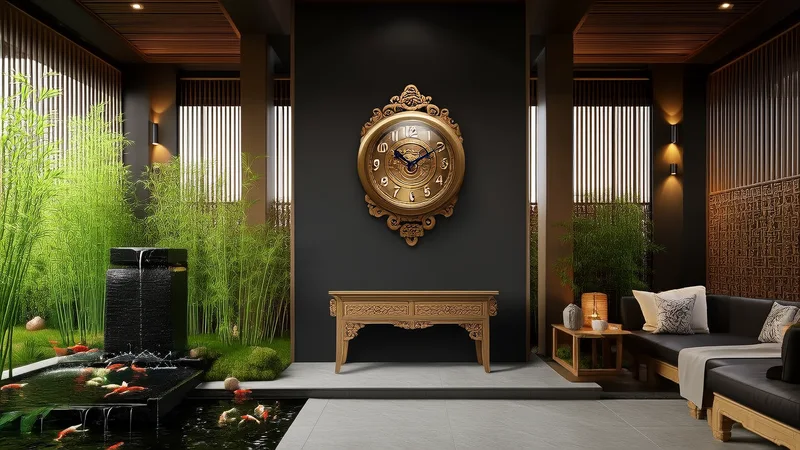
The Art of Clock Feng Shui: Harmonizing Time and Energy in Your Home
In the practice of Feng Shui, every object in your home carries a specific energy, or qi. While we often think of furniture, mirrors, and plants, the humble clock is a surprisingly powerful tool that influences the flow of energy in profound ways. Clocks represent the passage of time, the cycle of life, and the dynamic rhythm of your household. When placed correctly, they bring order, punctuality, and a steady pulse to your environment. When placed poorly, they can create anxiety, rush, or even stagnant energy. In this guide, we will explore the ancient wisdom of clock Feng Shui, offering practical advice on clock placement that will help you harness positive energy and avoid common pitfalls.
Clocks are quintessential yin and yang objects. Their ticking and moving hands represent vibrant Yang energy – constant movement and activity. This makes them ideal for areas that need activation, but dangerous for spaces meant for rest and stillness. The key to good clock Feng Shui is understanding where to place them to support the primary function of each room while respecting the deeper cultural taboos that have been passed down through generations. Let’s begin by exploring the most important spaces in your home.
Living Room: The Heart of Family Energy
The living room is often considered the energetic center of the home – a place where family gathers, guests are welcomed, and social energy circulates. Because the living room thrives on active, connected energy, it is one of the best places to hang a clock. A clock here serves as an anchor, reminding everyone of the shared schedule and the joy of spending time together. However, placement matters enormously.
- Place a clock on the wall opposite the main seating area – This allows everyone to glance at the time without turning their head, reducing anxiety and keeping the conversation flow natural.
- Avoid hanging a clock directly above the television – This creates a battle for attention and energy. The TV is a strong fire element and a portal; adding a clock above it creates chaotic, competing qi.
- Choose a round or gently curved clock – In Feng Shui, circles represent harmony, wholeness, and the metal element, which promotes clarity and precision. Sharp or triangular clocks can create “poison arrows” of harsh energy.
For the living room, a large, beautiful clock can become a focal point. Make sure it is in good condition, with a smooth second hand or even a silent design. A ticking clock in the living room can be too stimulating if you are trying to relax, so consider a quartz clock without an audible tick. The goal is to have time be a helpful partner, not a nagging presence.
Bedroom Clock: A Delicate Balance
The bedroom clock is arguably the most important and problematic piece in your home. The bedroom is a sanctuary of Yin energy – rest, romance, and deep sleep. Clocks, with their mechanical movement, are pure Yang energy, which can disturb the peaceful atmosphere. In Feng Shui, the ideal bedroom is a techno-free, calm cave. But since most of us need to wake up on time, a full banishment is unrealistic. Instead, you must apply strict rules to minimize negative effects.
- Never place a clock facing the bed. This is a serious Feng Shui faux pas. When you wake up and see the time immediately, your mind instantly jumps into the “rush” mode. It invites stress, blurred vision, and a feeling of being controlled by time. Instead, position the clock at a 90-degree angle from the bed – on a side wall, for example – so you have to make a small effort to look at it.
- Avoid alarm clocks with red or bright digital numbers. Red is a fire element that can overstimulate the mind. Blue or amber light is far more calming. The light from the clock can disrupt your melatonin production and your Feng Shui energy field simultaneously.
- Do not hang a pendulum clock in the bedroom. The swinging motion creates a restless, endless movement that prevents deep rest. A small, silent desktop clock is far better.
If you struggle with sleep, the best Feng Shui advice is to remove the clock from the bedroom entirely. Use your phone in “do not disturb” mode or a smart alarm on a nightstand, and turn it face down. The less time-conscious you are in the bedroom, the deeper your connection to rest and intimacy becomes. Remember, the bedroom is for two people and one body – not for the obsessive monitoring of minutes.
Avoid South: The Fire Element Conflict
One of the most overlooked rules in clock Feng Shui is the directional advice: avoid south. In the Bagua map, the south sector of your home or room is governed by the Fire element. The south represents fame, reputation, and your inner light. Clocks are associated with the Metal element, which, in the productive cycle of the five elements, melts when exposed to strong fire. This creates an energy of depletion and conflict.
When you hang a clock on a southern wall, you are placing metallic energy in the worst possible position. The fire of the south activates the metal of the clock, but the fire then weakens the clock's metal energy, which can dampen the timekeeping's ability to support your reputation and visibility. In practical terms, this can lead to feeling overlooked, rushed, and argumentative. If you are working on building your name or career, having a clock on the south wall can subtly sabotage your efforts.
“The clock is a master of time, but when placed in the south, it becomes a servant to the fire that destroys its spark. Keep time away from your brightest flame.”
Instead, choose to hang clocks in the north, east, or southeast areas. The north is associated with Water, which helps to refine metal and keep time flowing smoothly. The east and southeast, associated with Wood and Wealth respectively, support the growth and expansion that clocks symbolize. By aligning your clock with these directions, you activate a harmonious cycle of energy rather than a destructive one.
The Chinese Taboo: Never Give a Clock Gift
Now, let us address one of the most critical rules in Chinese Feng Shui and general cultural etiquette: never give a clock gift. This is not just a superstition; it is deeply rooted in the Chinese language and tradition. The phrase “送钟” (sòng zhōng), which means “to give a clock,” sounds exactly like the phrase “to attend a funeral” or “to be present at the end of one's life” – 送終. This linguistic similarity immediately brings a funeral connotation to the act of gifting a clock.
In Chinese culture, giving someone a clock essentially sends a message of wishing them death or a countdown to the end. Even a well-intentioned gift of a beautiful watch or clock is considered a major Chinese taboo. It is believed to sever the relationship, bring bad luck, and impose a "countdown" on the recipient's lifespan. If you are in a multicultural environment, you must be extremely careful about this. Many Chinese families will feel insulted and deeply unsettled by such a gift.
What if you receive a clock as a gift from someone unaware of this taboo? Do not panic. There is a common remedy: you should immediately give the giver a small amount of money in return. This transaction symbolically "purchases" the clock, rather than receiving it as a gift, thus breaking the negative association. The money can be any amount – even a coin works. This is a beautiful demonstration of how a simple action can neutralize bad Feng Shui and cultural misunderstanding.
Beyond the funeral connotation, clocks in Feng Shui are considered immutable objects of passing time. Gifting one is akin to gifting pressure and mortality. It is far better to gift other items like tea, fruits, or candles. If you absolutely must give a clock for practical reasons, include a monetary gift with it and explain the meaning in advance, or ask the recipient if they mind. However, the safest and wisest advice is to never give a clock gift under any circumstances.
Other Essential Clock Placement Tips
Now that we have covered the most critical rules, let’s look at other practical guidelines to ensure your clocks are working for you, not against you.
- Check the time accuracy. A clock that is slow, fast, or broken is disastrous in Feng Shui. It represents stagnation, unreliability, and a misalignment with the natural flow of the universe. If a clock stops working, fix it immediately or throw it away. A stopped clock is a symbol of “stopped life energy” and can bring a sense of hopelessness to your home.
- Do not place clocks in the entryway or directly facing the front door. The main entrance is where qi enters your home. A clock facing the front door can push the energy back out, preventing good fortune from settling. It also creates a pressure to “hurry up” every time you leave or enter, increasing anxiety. Instead, hang a clock on a side wall in the hallway, facing the living space.
- Avoid clocks in the kitchen. The kitchen is the source of nourishment and abundance. Clocks here impose a schedule on eating, which is counterproductive to mindful nourishment. You don't want to be racing against the clock while cooking; cooking should be an intuitive, loving process. If you must have a clock in the kitchen, place it high and out of direct sight, so you have to consciously look for it.
- In a child's study or homework area, a small clock is acceptable, but it should not be too prominent. It should encourage time management without creating a sense of competition. Use a timer instead, if possible, as a timer has a defined start and end and doesn't constantly remind the child of passing time.
- Number of clocks in a home: Feng Shui emphasizes balance. You do not need a clock in every room. In fact, the more clocks you have, the more you divide your attention and create unnecessary time pressure. A simple guideline is to have one main clock in the living room and one in an office or study. This centralizes your sense of time. When you have too many clocks, each one has a slightly different second, creating subconscious discord.
The Symbolism of a Pendulum Clock
Pendulum clocks are beautiful, but they carry a heavy energy. The back-and-forth swing repeatedly strikes the energy field like a swinging sword. In feng shui, the pendulum creates a destructive pattern, cutting through the qi. They are especially inappropriate for a dining room, where you want calm and nourishing energy. They are also too active for a meditation room or prayer room. If you have a beloved grandfather clock, place it in a large, open entry hall or a wide corridor where its energy can dissipate without harming the flow. Just make sure the pendulum is well-balanced and the sound is soothing, not aggressive.
Final Thoughts on Clock Feng Shui
Clocks are a necessary part of modern life, but they do not need to dominate your spiritual space. By being mindful of clock placement, you can transform a simple timekeeping device into a feng shui ally that promotes punctuality, harmony, and positive energy. Remember the core principles: keep clocks away from the bedroom's restful haven, avoid the south wall to protect your reputation, and absolutely honor the Chinese taboo against giving clocks as gifts. The funeral connotation is too strong, and the risk of offending someone is not worth the gesture.
Incorporate these tips gradually. Start by moving your bedroom clock so it does not face your resting body. Then, assess your living room
Frequently Asked Questions