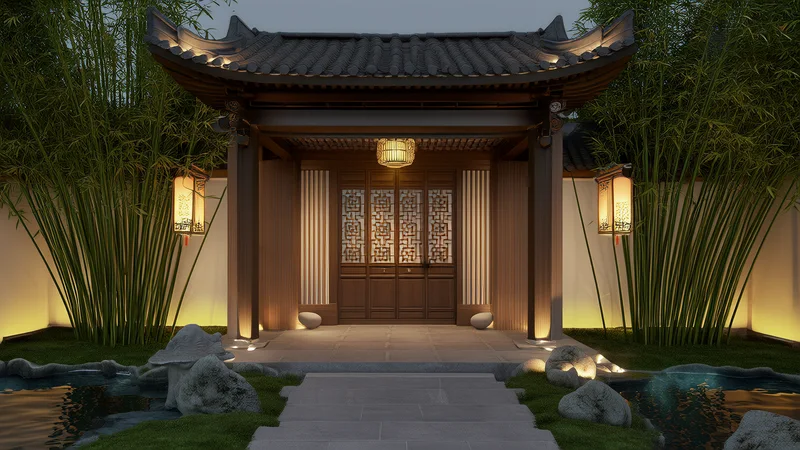
Should Your Front Door Face West? The Complete Feng Shui Door Orientation Guide
Your front door is more than just an entrance—in Feng Shui, it is the “mouth of chi” through which all energy enters your home. The direction your door faces determines how that energy flows into your life, influencing everything from career and health to relationships and wealth. Among the eight cardinal directions, the west facing door is often misunderstood. Is it good or bad? The answer, as with most Feng Shui, depends on your personal energy profile and the specific circumstances of your home. This comprehensive door orientation guide will help you decide if a west-facing entrance is right for you—and if not, what you can do about it.
Why Front Door Direction Matters So Much
In classical Feng Shui, the front door is the primary gateway for chi. Every day, as you enter and leave, you are interacting with this energy. Over time, the direction your door faces shapes the dominant energetic tone of your entire household. A south facing door, for example, is traditionally associated with fame and recognition, while a north facing door relates to career and life path. The west facing door speaks to creativity, children, and joy—but it also carries specific elemental qualities that can be challenging for certain people.
“The front door is the most important architectural feature in Feng Shui. It is where the dragon’s breath enters your home. Choose its direction wisely, and you align with cosmic currents; ignore it, and you swim against the tide.” – Classical Feng Shui proverb
Because each home has its own compass direction, and each person has their own energetic makeup, there is no universal “best” front door orientation. Instead, you must consider both the eight mansions system (which focuses on the home’s mountain direction) and your personal kua number (which reveals your lucky and unlucky directions). Let’s break this down step by step.
The Eight Mansions Framework for Door Orientation
The eight mansions school of Feng Shui divides a home into eight sectors, each with a different quality of energy. The two most important sectors are the sheng chi (life-giving) and the fu wei (vitality/self-improvement) locations. The entrance door should ideally be placed in a favorable sector of the home, and its facing direction should be auspicious for the occupants.
For a west facing door, the home’s sitting direction is east. According to eight mansions, this makes it an “East Group” house (sitting east, facing west). People who belong to the East Group (with kua numbers 1, 3, 4, and 9) will generally find a west-facing door less auspicious because West is an unfavorable direction for them. Conversely, those in the West Group (kua numbers 2, 6, 7, and 8) may find a west-facing door naturally supportive—especially if West is their auspicious door direction (such as sheng chi or tien yi).
Is West Your Auspicious Door Direction? Find Your Kua Number
Your kua number is calculated from your year of birth (based on the Chinese solar calendar) and your gender. Here’s a quick way to find it:
- Add the last two digits of your birth year together. Reduce to a single digit.
- For males: subtract that digit from 10. For females: add 5 to that digit, then reduce.
- Example: A woman born in 1985 → 8+5=13 → 1+3=4 → 4+5=9. Her kua number is 9.
If your kua number is 2, 6, 7, or 8, you belong to the West Group. For you, West is a positive direction—it may bring harmony, wealth, or helpful people if it aligns with your personal best directions. If your kua number is 1, 3, 4, or 9 (East Group), West represents a more challenging energy, especially for health or relationships.
A west-facing door is not “good” or “bad” in isolation. It is effective only when it matches the occupant’s kua number and the home’s eight mansions configuration. Without this alignment, even a beautiful door cannot bring good fortune.
Characteristics of a West Facing Door
The West is ruled by the Metal element, specifically the energy of autumn—harvest, completion, and refinement. In Feng Shui, a west facing door imparts qualities such as:
- Creativity and expression: West energy activates the “Children & Creativity” bagua area. Homes with this orientation often support writers, artists, and entrepreneurs who need to birth new ideas.
- Joy and sociability: West is associated with laughter, play, and merriment. It can make a home feel lively and welcoming.
- Precision and discipline: Metal energy brings structure. This can be excellent for anyone working in law, finance, or engineering.
- Sensitivity to humidity and clutter: Metal is affected by water and earth. If your home has damp issues or too much clutter, a west-facing door may amplify stagnation.
However, there are caveats. West-facing doors are considered less ideal for couples seeking more romance (West inclines toward childlike joy rather than adult passion), and for those who need a lot of quiet introspection, the active social energy may feel draining. Additionally, in the later afternoon, the setting sun blasts directly into a west-facing entrance, causing overheating and sharp shadows—two conditions that are generally discouraged in good Feng Shui.
South Facing Door vs. North Facing Door vs. West Facing Door
To understand where a west-facing door fits in, it helps to compare it with the more common orientations:
- South facing door: The classic “fame and recognition” door. It receives abundant sunlight all day, representing fire energy. Best for ambitious leaders, but can be overwhelming for those who crave peace.
- North facing door: A water-energy door, associated with career and deep wisdom. It is calm and reflective, but can be too cold or isolating if unused.
- West facing door: A metal-energy door, representing creativity, children, and completion. It is warm in the late afternoon but lacks the full radiant energy of the south.
Each direction has its strengths and weaknesses. The key is not to ask “which door is universally best” but rather “which door orientation aligns with my current life goals and personal energy.” If you are a young couple wanting to start a family, a west-facing door may be wonderful. If you are studying for high-level exams, a north-facing door might serve you better. There is no single right answer.
Feng Shui Remedies for a West Facing Door That Doesn’t Fit
If your home already has a west facing door but your kua number falls in the East Group, or if you simply feel disconnected from the energy, don’t worry—Feng Shui is about harmonizing, not just choosing. Here are several remedies to transform a problematic west-facing entrance into a supportive one.
1. Adjust the Metal Element
Since West is Metal, adding too much metal can intensify its qualities. Instead, introduce earth elements to soften and ground the energy. Earth produces Metal in the productive cycle, so it helps stabilize the direction. Place a ceramic urn, a clay pot with healthy plants, or a set of crystal stones near the door. Avoid excessive white, gold, or silver decorations, which may overactivate Metal.
2. Use Light and Color
The setting sun’s glare can be harsh. Install sheer curtains or a decorative porch overhang to diffuse the light. For the door’s color, consider warm earth tones like beige, ochre, or soft terracotta. These colors bring the supporting Earth element into play. Avoid pure black or dark blue (water) at the entrance, as water drains Metal and can deplete the home’s vitality.
3. Add a Water Feature or Wind Chime
If you want to enhance the creative aspects of a west-facing door, a small water fountain (placed to the side, not blocking the door) can be lovely. Water generates Metal through the productive cycle, so it nurtures the West’s gifts without clashing. Alternatively, a six-rod metal wind chime (the number six corresponds to Metal) hung inside the entry can activate positive chi, but only if you are in the West Group. For East Group members, avoid metal wind chimes entirely—they will strengthen an already unfavorable direction.
4. Strengthen the Bagua Area
Inside your home, the west side of the house is the “Children & Creativity” sector. If your front door faces west, that entrance area is a prime spot to activate creativity. Place a family photo, children’s artwork, or a small whiteboard for doodling near the door. This turns the entrance into a personal inspiration gateway, regardless of your kua number.
When a West Facing Door Is Actually a Perfect Match
There are many situations where a west facing door is truly auspicious, not just an obstacle to fix. Here are the top scenarios:
- Your kua number is 7 or 8 (West Group). For you, West is often your auspicious door direction—specifically, the “sheng chi” (life growth) or “tien yi” (health) direction.
- You work in fields related to Metal: finance, legal, engineering, high-tech, or metalworking. West aligns with your career prosperity.
- You are an artist, writer, or designer seeking to boost your creative output. The West’s children-and-joy energy directly fuels the imagination.
- You are elderly or retired and prefer a calm, structured daily rhythm. The West brings a sense of completion and legacy.
- You have social children or are hoping to conceive. The West is deeply connected to fertility and the nurturing of young life.
“A west-facing door is like an autumn harvest. It asks: what have you planted, and what are you ready to share with the world? For those who welcome it, this door yields abundant fruit.” – Modern Feng Shui interpretation
Practical Steps for Any Door Orientation
No matter which direction your door faces, apply these universal principles to keep your front door facing direction working in your favor:
- Keep it clean and unblocked. A cluttered, dirty entrance blocks chi. Sweep daily and remove any obstacles like shoes, umbrellas, or broken decorations.
- Ensure the door opens smoothly. Squeaky hinges or a sticking lock create friction in life energy. Oil and repair as needed.
- Make the door itself beautiful. A solid, well-painted door with attractive hardware invites positive chi. Avoid mirrors directly opposing the entrance, as they can bounce energy back out.
- Use a welcome mat consciously. Choose a mat in a supporting earth or metal color based on your door’s direction. For west-facing doors, go with yellow, beige, or light gray.
- Check your home’s overall planning. If your bedroom or main living area sits in a negative sector of the eight mansions, no door direction will fully compensate. Integrate the front door with the home’s complete layout.
The Final Verdict on West Facing Doors
So, should your front door face west? The honest answer is: it depends. A west-facing door is a powerful and complex orientation. It brings creativity, joy, and discipline, but it demands that you understand your own energy (via your kua number) and the eight mansions of your house. If West aligns with your personal best directions, you have a golden opportunity. If it doesn’t,