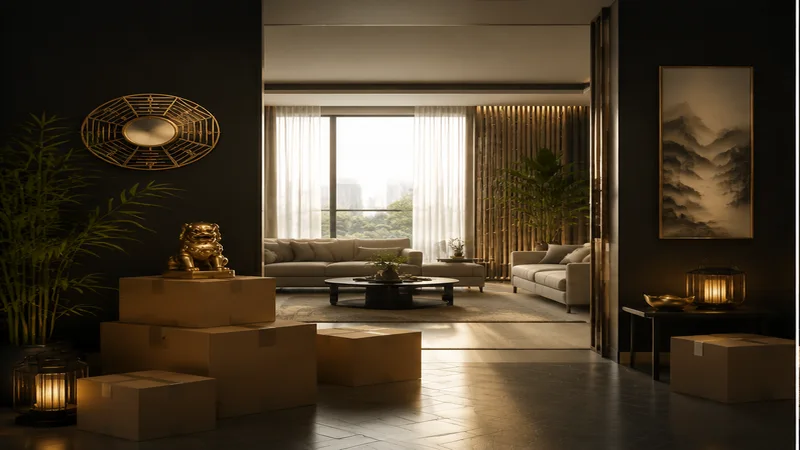
Your Complete Moving House Feng Shui Checklist
Moving into a new home is one of life’s most powerful transitions. It marks a fresh chapter, a blank canvas for your intentions, and a new environment that will influence your energy every single day. From a Feng Shui perspective, moving house is not just a logistical event—it is an energetic one. How you plan your move, what you bring in first, and how you prepare the space can shape the fortune, harmony, and vitality of your new home. This comprehensive moving in checklist will guide you through every step, ensuring that your arrival is blessed with positive Chi and that you start your new life on the strongest possible foundation.
Step 1: Choose an Auspicious Date
In classical Feng Shui, timing is as important as space. The energy of the universe shifts daily, and selecting an auspicious date for your move can significantly enhance the benefits of your new home. This is not about superstition alone—it is a practical way to align yourself with supportive cosmic rhythms. Ideally, you want a date that is favorable for “moving into a new residence” according to the Chinese almanac (Tong Shu). Avoid dates that clash with the day’s energy and days that are considered inauspicious for new beginnings. If you cannot consult a Feng Shui master, a simple rule is to avoid the first and last days of the lunar month, and to choose dates when the weather feels calm and bright. Early morning is often considered the best time to enter a new home because the rising sun brings rising Chi. Whatever date you choose, approach it with a clear mind and a positive intention—your own awareness is a powerful component of auspicious timing.
“The energy you bring into your home on the first day sets the tone for all the days that follow. Enter with gratitude, not haste.”
Step 2: The New Home Ritual – Prepare Before You Move
Before you bring in boxes, furniture, or even your family members, the space itself needs to be energetically reset. This is the heart of the new home ritual: a series of intentional acts that clear out any residual energy from the previous occupants and invite fresh, vibrant Chi into your domain. Begin this ritual immediately after you receive the keys, ideally a day or two before the actual move. Walk through every room and open all the windows and doors. Let the air flow freely for at least an hour. This physical airflow is the first step in releasing stagnant or heavy energy. As you walk, speak your intention aloud—something simple like, “I welcome peace, health, and prosperity into this home.” Your voice carries vibration, and this conscious declaration helps to program the space with your personal frequency.
Physical Cleaning is Energy Cleaning
No Feng Shui ritual can replace real, thorough cleaning. Dust, grime, and clutter are physical manifestations of stagnant energy. Sweep, mop, wipe down every surface, and clean the windows until they sparkle. Pay special attention to corners, which tend to collect both dust and stagnant Chi. In Feng Shui, the corners of a home are where energy can become trapped if ignored. Use natural cleaning products where possible—vinegar, lemon, and baking soda are excellent not only for their non-toxic properties but also for their cleansing vibrations. As you clean, imagine that you are washing away all traces of the past, leaving the space pure and ready for your new chapter. This is an essential part of the moving in checklist that many people overlook, but it is one of the most impactful.
Step 3: Space Clearing – More Than Just Smudging
Space clearing is the energetic counterpart to physical cleaning. It involves using sound, smoke, and intention to purify the emotional and spiritual residue left behind by previous occupants. While smudging with white sage is popular, traditional Feng Shui often uses incense, bells, singing bowls, or even a simple hand clap. The key is to move through every room, from the back of the house to the front door, making sounds or waving smoke into every corner. Pay attention to built-in closets, bathrooms, and attics—these are places where energy can hide. As you do this, stay focused on your intention to release all old energy and invite fresh, vibrant Chi to fill the space. If you use sound, let the resonance of a bell or bowl linger in each room until it naturally fades. If you use incense, choose scents that are traditionally uplifting, such as sandalwood or palo santo. Remember that space clearing is not a one-time event; you can repeat it whenever your home feels heavy or after arguments or illness.
A powerful addition to your space clearing is the placement of salt bowls. Leaving small dishes of sea salt in the corners of each room for 24 hours can absorb negative energy. Dispose of the salt outside your home afterward, and rinse the bowls with clean water. This simple but effective practice is a favorite among Feng Shui practitioners and an excellent component of any new home ritual.
Step 4: First Items to Bring In – The Order Matters
In Feng Shui, the very first items that cross the threshold of your new home carry immense symbolic weight. They are the pioneers of your new life, and their energy will influence the Chi of the entire household. This step of the moving in checklist is often the most overlooked, but it is one of the most powerful. Do not bring in boxes, furniture, or personal belongings first. Instead, choose specific first items that represent prosperity, protection, and happiness. A classic recommendation is to bring in a bag of rice, a container of salt, and a bottle of water. Rice symbolizes abundance, salt cleanses and preserves, and water represents wealth flow. Together, they establish a strong foundation of practical and spiritual nourishment. Additionally, many traditions encourage bringing in a broom, a cookpot, and a lamp or candle. The broom sweeps out negativity, the cookpot nourishes the family, and the lamp lights your path. If you have a religious or spiritual emblem, a family heirloom, or a piece of art you love, bring that in as the very first item to place in the heart of your home—your living room or family altar. This personal touch anchors your unique energy in the space.
As you carry these items, walk through the front door slowly and with intention. You might say a prayer, chant, or simply breathe deeply and smile. The emotion you feel at this moment will be imprinted on the home. Then, after the symbolic items are in place, you can bring in the rest of your belongings, beginning with the essentials for your first night.
Step 5: Bed Placement – Activating Rest and Relationships
One of the most critical elements of your new home’s energy is the placement and setup of your bed. Since you spend roughly a third of your life sleeping, the quality of Chi in and around your bed profoundly affects your health, relationships, and overall vitality. This is where bed placement becomes a central focus of your Feng Shui practice. The ideal position for your bed is the “command position”—a spot where you can see the bedroom door while lying in bed, but you are not directly in line with it. This gives you a sense of safety and control, allowing your body to relax deeply during sleep. Avoid placing the bed under a window, as the energy from outside can disturb your rest and create instability. Also, avoid positioning the foot of the bed directly facing the door—this is known as the “coffin position” in Feng Shui and can feel draining.
Your headboard should be solid and attached to the bed. A solid headboard symbolizes support from behind, giving you strength in your waking life. Place the bed against a wall that is not shared with a bathroom or toilet, if possible, to avoid draining energy. Once the bed is in its ideal position, it’s time for activation. In Feng Shui, activation means intentionally “turning on” the beneficial energy of a space or object. For the bed, this begins with fresh, clean bedding in soothing colors. Choose colors that align with your intentions: soft earth tones for stability, gentle greens for growth and healing, or calming blues for relaxation. Ensure both sides of the bed have equal access and an equal bedside table, to promote balance and equality in relationships. Then, as you make the bed for the first time, set an intention. Smooth the sheets with love and gratitude. This simple act turns the bed from a piece of furniture into a sacred haven for rest. Do not sleep in the bed on the very first night if you can avoid it; instead, let the space settle for a few hours with the window open and positive affirmations spoken aloud.
Other Rooms – A Quick Activation Guide
While the bedroom is critical, do not neglect the rest of your home. The kitchen, for example, represents health and wealth. Bring in a kettle and boil water on the first day to activate the hearth and source of nourishment. The living room is the center of social energy, so arrange your furniture to encourage conversation and connection. The main entryway should be kept clean, bright, and welcoming, because it is the mouth of Chi—the path through which all energy enters. A beautiful welcome mat, a bright light, and a clear, clutter-free path are essential. Each of these actions is part of the broader activating of your new home, making every corner intentional and alive.
Complete Moving In Checklist – Your Final Summary
To help you stay on track, here is a condensed but complete moving in checklist that covers all the key steps of a Feng Shui-conscious move:
- Consult a Tong Shu or calendar to select an auspicious date and time for your move.
- Before the move, conduct a space clearing session: open windows, use sound, and burn incense or sage.
- Deep cleaning of every room, with special attention to corners and closets.
- Decide on your symbolic first items (rice, salt, water, broom, family heirloom) and prepare them in a visible bag.
- Perform a new home ritual: walk through the space, state your intentions, and place your symbolic items in a central location.
- Arrange your bed placement carefully: command position, solid headboard, not under a window, not facing the door directly.
- Activate the bed by making it with fresh linens and positive intentions.
- Activate the kitchen by boiling water and preparing a small meal on the first day.
- Keep the main entrance clean, bright, and clutter-free to invite positive Chi.
- After settling, take time to sit quietly in each room every day for the first week, simply observing the space and connecting with its energy.
Final Thoughts: Let Your Intention Guide You
Moving into a new home is an opportunity to reset not just your address, but your entire energetic foundation. The rituals and recommendations in this guide are not rigid rules—they are pathways to mindfulness. The most important element is your own intention. When you approach your move with respect for the process, with gratitude for your new space, and with clarity about what you want to attract, the Feng Shui will naturally follow. Trust your intuition. If a certain practice feels meaningful to you, embrace it fully. If something does not resonate, leave it aside. The ultimate goal is to make your new house a true home—a place where your spirit feels nurtured, your body is rested, and your life can flourish. Welcome home, and may your new residence be filled with endless blessings, love, and abundant positive Chi.