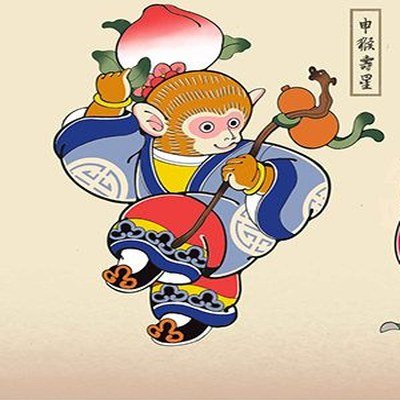
Chinese Zodiac · Sign 9 of 12
Brilliant, inventive, and delightfully unpredictable
Hóu · Shen (申) · · Yang
The Monkey is the zodiac's innovator — brilliant, versatile, and constitutionally incapable of staying in one lane. This is Yang Metal energy applied to intelligence: sharp, precise, and capable of cutting through complexity with remarkable speed. Monkey people learn faster than anyone, adapt to new situations almost instantly, and can become credibly expert in domains they discovered last week. The challenge is that the same restless intelligence that makes the Monkey so capable also makes sustained focus difficult when novelty fades.
Every strength in the Monkey archetype carries a shadow — the same quality turned one degree too far. These are editorial interpretations, not clinical assessments.
The Monkey archetype is often driven by a need for intellectual play, flexibility, and social recognition. They want to prove they are clever enough to handle anything, and the game can be more important than the goal.
Each Monkey carries a secondary element modifier from the 60-year GanZhi cycle. Your birth year determines which type of Monkey you are.
| Element | Birth Years | Key Personality Modifier |
|---|---|---|
| Wood | 1944, 2004 | Creative, idealistic, and growth-oriented. More flexible than other Monkey types. |
| Fire | 1956, 2016 | Passionate, charismatic, and driven. The most intense expression of Monkey energy. |
| Earth | 1908, 1968 | Stable, practical, and dependable. Grounded and methodical among Monkeys. |
| 1920, 1980 | Principled, determined, and structured. The most disciplined type of Monkey. | |
| Water | 1932, 1992 | Intuitive, adaptable, and socially fluid. The most perceptive Monkey variant. |
The Monkey is a stimulating, playful, and intellectually alive partner — relationships with Monkeys are rarely boring. The challenge is depth: the Monkey's attention moves quickly, and a partner who cannot keep it genuinely engaged will find the Monkey's focus drifting. The Rat brings intellectual match-making — both are sharp, adaptable, and appreciate the other's resourcefulness. The Dragon provides scale and vision that gives the Monkey's cleverness meaningful application. The Snake is the Monkey's secret friend — an unlikely pairing of wit and wisdom that tends toward surprisingly deep connection.
Monkeys excel in fields that reward intellectual versatility and innovative thinking: technology, scientific research, comedy, writing, finance (particularly trading and arbitrage), and entrepreneurship. The Monkey's ability to hold multiple complex variables simultaneously makes it exceptional in analytical roles. It struggles in repetitive environments — the Monkey that is underutilized becomes bored, and bored Monkeys cause problems.
Yang Metal governs the lungs and large intestine. Monkey people can be susceptible to respiratory issues, particularly under stress. The Monkey's restless energy makes it prone to overextension — doing too much, sleeping too little, eating inconsistently. Regular routines that the Monkey may find boring are nonetheless genuinely health-protective. Mental health is also a consideration: the Monkey mind can spiral into anxiety when it lacks sufficient stimulation or structure.
These are traditional associations from Chinese cosmology and cultural metaphor — not medical claims or health advice.
2026 Horse year is generally positive for Monkey — the Yang Fire energy amplifies Monkey innovation and career momentum. New technology or creative ventures find particularly receptive conditions. Social life is active and professionally useful. Financial gains are available but the Monkey should resist the urge to reinvest everything immediately.
All fortune readings are traditional cultural perspectives for entertainment. Not a substitute for professional advice.
Notable Monkeys
The Monkey crossed the Great River on the raft it helped build with the Goat and Rooster, arriving ninth. In Chinese culture, the Monkey holds a particularly beloved position through the character Sun Wukong (孫悟空) — the Monkey King from Journey to the West. Sun Wukong is the archetype of the Monkey sign: supernatural intelligence, shape-shifting versatility, irreverent attitude toward authority, and ultimately a capacity for profound transformation when guided by genuine purpose.
The same energy expresses differently depending on circumstance. Most people move between all three — the question is which state you spend the most time in, and what moves you between them.
In a classroom, the Monkey explains a math problem by turning it into a playful story with characters, making the students laugh and grasp the concept quickly. During a team project, they suggest a fun icebreaker that eases tension and sparks innovative ideas, while ensuring tasks are completed on time.
At a serious business meeting, the Monkey cracks inappropriate jokes that derail the agenda, and they skip a crucial deadline because they were distracted by a new hobby. They manipulate office gossip for amusement, creating mistrust among colleagues.
In a formal dinner party, the Monkey sticks rigidly to polite small talk, avoiding any playful banter, and their face remains expressionless. They criticize a friend's playful suggestion as immature, focusing only on practical matters and missing the joy in the moment.
The Monkey archetype is here to learn that true intelligence blends curiosity with responsibility, allowing them to shine without leaving chaos in their wake. They must discover how to channel their playfulness into meaningful contributions, so their wit becomes a tool for connection rather than distraction.
Interactive · Self-Reflection
7 scenarios. No right answers. Your pattern reveals which of the three Monkey states you currently spend the most time in.
Chinese folk tradition holds that each of the 12 zodiac animals is missing one thing. The biological observation and what it might mirror in human nature.
Many macaques have internal cheek pouches — storage pockets inside the mouth — but the face itself is lean, angular, almost gaunt. The hunger shows on the face even when the pouches are full.
The Monkey archetype cannot fully conceal its desire. The face announces what it wants. This may be why the Monkey's intelligence is both its asset and its vulnerability — people can see what it's after.
The human nature reflection is a ChineseFortuneTools editorial interpretation — not a claim of classical or scientific origin.
A Question for You
"Who are you when you're not performing?"
Classical Chinese philosophy has observed the patterns behind the Monkey archetype for centuries. These quotes resonate with the Monkey's nature.
"To learn and practice what is learned in due time—is this not a joy? To have friends come from afar—is this not delightful? To remain unruffled when others do not recognize your merits—is this not the mark of a gentleman?"
"Reviewing the old and thus knowing the new—this can be a teacher."
"To shrink something, you must first expand it; to weaken it, you must first strengthen it; to discard it, you must first exalt it; to take from it, you must first give to it. This is called subtle insight."
These Chinese idiom stories illuminate the same human patterns that define the Monkey archetype — told over thousands of years because they refuse to stop being true.
Origin: Warring States (Zhuangzi)
A youth from the town of Shouling traveled to Handan, the splendid capital of Zhao, to admire the graceful gait of its citizens. For weeks he practiced every step, trailing the locals and modulating his pace, but he could never capture their style. In panic, he tried too hard, and in trying to imitate the astonishing Handan walk, he completely forgot his natural gait. Finally he had to crawl all the way home, an absurd spectacle of a man who had lost himself in the pursuit of another's way.
Origin: Warring States Period (Zhuangzi)
In ancient Yue, a beauty named Xi Shi often suffered from chest pain and frowned, which made her look even more enchanting. A plain-looking woman named Dong Shi, hoping to capture the same charm, mimicked Xi Shi's frown and hand-on-heart gesture wherever she went. But her exaggerated performance only made her look hideous, causing neighbors to lock their doors and flee at her approach. Instead of enhancing her appearance, her foolish imitation exposed her lack of self-awareness and turned her into a laughingstock.
Origin: Warring States Period (Zhuangzi)
A monkey keeper fed his troop four chestnuts each morning and three each evening, but the monkeys flew into a rage at the unfairness of the evening share. The keeper, quick to respond, proposed giving them three chestnuts in the morning and four in the evening instead. Merely reversing the numbers instantly satisfied the monkeys, who failed to see that the total remained unchanged. The keeper laughed at how easily their perception could be manipulated by a simple rearrangement of the same amount.
15 — Reflection
"Who are you when you're not performing?"
This question belongs to the Monkey archetype — not as a verdict, but as an invitation. Your zodiac doesn't define you. It gives you a story to explore.
Recent Years of the Monkey: 1992, 2004, 2016, 2028. The next Year of the Monkey begins February 2028. Element variants: 1992 Water Monkey, 2004 Wood Monkey, 2016 Fire Monkey, 2028 Earth Monkey.
Find your sign by birth date using our LiChun-accurate algorithm.
Your complete Year, Month, Day & Hour pillars chart.
Find auspicious dates for weddings, moving, business, and more.
How the Yin Fire Goat year (丁未) affects Monkey — career, love, wealth & health outlook.