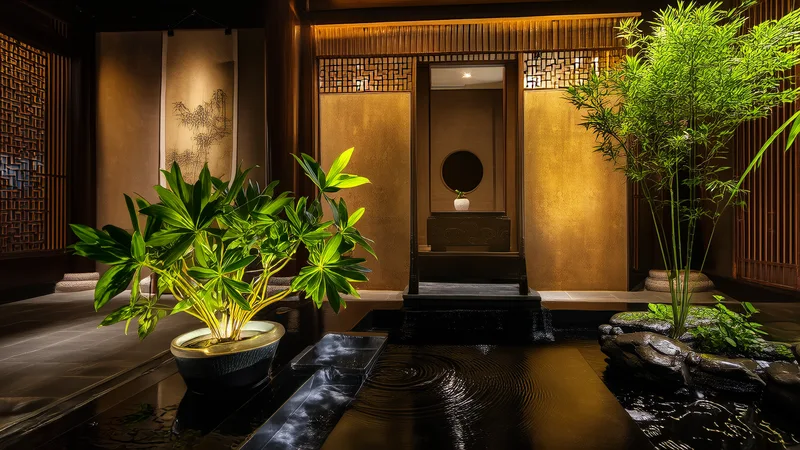
Why Are Plants Important in Feng Shui?
Plants are among the most popular feng shui decorations — and for good reason. They symbolize life, growth, renewal, and vitality. Unlike most other feng shui objects, plants also have obvious visual and environmental benefits: they make indoor spaces feel more alive, add natural color and texture, soften architectural edges, and create a sense of connection with the natural world.
Traditional feng shui associates plants with the Wood element, which is connected with growth, flexibility, resilience, and upward movement. A healthy plant can also soften corners that otherwise feel visually stagnant — corners that, in traditional feng shui, can accumulate stale qi if left empty and unused.
The Money Tree
The Money Tree (Pachira aquatica) is one of the most popular plants associated with wealth in Chinese culture. Its braided trunk, distinctive five-lobed leaves, and name make it especially popular in homes, offices, and businesses across East Asia. In feng shui symbolism, it is associated with financial growth, prosperity, and good fortune.
From a practical perspective, the Money Tree is a relatively hardy indoor plant. It tolerates moderate watering, adapts to indoor light conditions reasonably well, and grows steadily with appropriate care. A healthy, thriving Money Tree is therefore both symbolically and practically appropriate for a home or office.
Lucky Bamboo
Lucky bamboo (Dracaena sanderiana) is another classic feng shui plant. Bamboo has been associated with resilience, flexibility, longevity, and good fortune in Chinese culture for centuries. Its ability to grow straight under pressure while remaining flexible has made it a metaphor for admirable personal qualities.
Lucky bamboo is particularly popular as a gift because of its cultural associations with good wishes. It can grow in soil or in water with appropriate nutrients. The number of stalks is sometimes given symbolic meaning — three stalks for happiness, five for health, eight for wealth, and so on.
Pothos
Pothos (Epipremnum aureum) is popular as a feng shui plant because it is genuinely easy to care for. It can tolerate lower light conditions, irregular watering, and indoor air quality variations that would stress more demanding plants. Its trailing green leaves can make a room feel more natural and soften hard shelving edges or bare walls.
From a feng shui perspective, pothos represents growth and vitality through its vigorous trailing habit. From a purely practical standpoint, it is also one of the most forgiving plants available — making it ideal for people who want the benefits of indoor plants without the commitment of high-maintenance varieties.
Cacti and Thorny Plants
Cacti occupy an interesting position in feng shui. Their sharp spines are traditionally associated with defensive or protective energy rather than nurturing growth. Traditional feng shui sometimes recommends thorny plants in specific outdoor positions — for example, on a balcony facing a sharp building corner or a harsh external road — where they can symbolically act as a protective buffer against sha qi (unfavorable external energy).
Inside the home, especially in bedrooms and relaxation areas, heavily spined plants are sometimes considered less appropriate for feng shui purposes. The energy is more active and potentially aggressive than what a restful environment requires.
From a purely practical perspective: cacti and other thorny plants should simply be placed where they are safe. Do not put a large cactus beside a narrow walkway, near a doorway, or anywhere children or elderly people regularly pass.
Where Should Feng Shui Plants Be Placed?
The most common favorable locations for feng shui plants include:
- Living room corners: soften stagnant visual areas and add height and vitality
- Entrance area: create a welcoming, living first impression
- Balcony: usually has the best light and airflow for plant health
- Home office or study: plants near a workspace can make the environment feel more natural and pleasant
- Business reception area: lucky bamboo and money trees are especially common here
The important caveat: do not put a plant somewhere simply because a feng shui chart labels it a "wealth corner" or "lucky position." The plant still needs adequate light, appropriate watering, and suitable temperature to remain healthy. A dying plant in the "correct" position is worse feng shui than a healthy plant in a slightly less symbolically optimal spot.
Plants Near Computers and Desks
Some traditional feng shui sources recommend placing plants near computers and electronic equipment. It is important to be clear about what this can and cannot do: houseplants are not a proven method for eliminating electromagnetic radiation from computers or phones. The scientific evidence for this claim does not exist.
However, plants on a desk or near a workspace can make the environment more pleasant and comfortable. They contribute to a sense of connection with nature, which many people find psychologically refreshing during long work sessions. A small plant on a desk therefore makes sense — but primarily as part of a comfortable workspace rather than as a radiation-blocking device.
Balcony Feng Shui Plants
Balconies are excellent locations for plants because they typically receive more light and better ventilation than interior rooms. Traditional feng shui divides balcony plants into two broad uses:
- Plants that attract or strengthen positive energy: broad-leafed plants such as bamboo palm, rubber plants, and vigorous evergreens are often favored for their soft, expansive appearance
- Plants used to soften or buffer harsh external features: if the balcony faces a sharp corner, busy road, or unpleasant view, plants can create a visual and symbolic buffer
In either case, keep the plants healthy. A balcony filled with dead leaves, empty pots, and neglected plants creates exactly the opposite impression of what feng shui intends.
Dead Plants and Feng Shui
This is one of the simplest and most universal feng shui plant rules: do not keep dead or dying plants. Traditional feng shui consistently associates healthy, growing plants with vitality and positive energy — and dead or dying plants with stagnation, neglect, and decline.
From a practical standpoint, dead plants also make a home look neglected and can attract insects or mold. If a plant cannot be revived despite appropriate care, it should be removed and replaced with something that can actually thrive in the available conditions.
The Balance Rule: Not Too Many Plants
More plants do not automatically mean better feng shui. A space genuinely overcrowded with plants can create:
- Excess humidity that encourages mold and condensation
- Pest problems — spider mites, fungus gnats, and other insects thrive in crowded plant arrangements
- Reduced natural light as large plants block windows
- Reduced airflow through the room
- Visual clutter that overwhelms the space rather than enriching it
The goal should be balance. A few well-chosen plants that genuinely thrive will do far more for a room's atmosphere than a crowded collection of struggling specimens.
The best feng shui plant is often simply a healthy plant that you can actually keep alive in the location where you place it. A thriving ordinary plant beats a struggling "lucky" one every time.