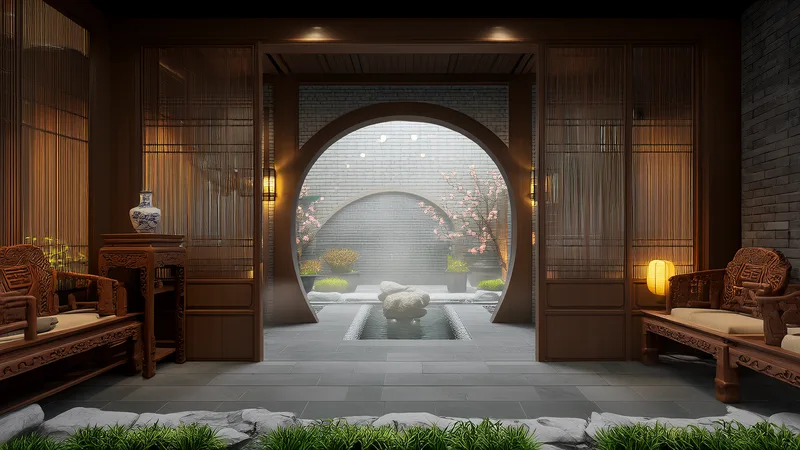
'Door Faces Three, Windows Avoid Four': Traditional Door & Window Orientation Logic
In the rich tapestry of traditional Chinese architecture, few rules are as practical yet mystical as the ancient saying about doors and windows. 'Door Faces Three, Windows Avoid Four' (门对三,窗避四) represents a distilled wisdom passed down through generations of craftsmen and Feng Shui masters. At first glance, it appears to be a simple numerical guideline. But beneath its surface lies a sophisticated understanding of climate, airflow, solar path, and the invisible movement of qi—the vital energy that animates every home. This article unpacks this traditional maxim, offering you actionable insights for applying traditional feng shui rules to your own living space, whether you are building new or renovating an existing dwelling.
The essence of the rule is elegant: a main door should ideally face one of three auspicious directions, while windows should deliberately avoid four specific orientations. These numbers are not arbitrary. They emerge from centuries of observing how sunlight, wind, and water vapor interact with human habitation. In the traditional mindset, a door is the mouth of chi—it inhales good fortune and exhales stagnation. A window, meanwhile, is the eyes and the breath of a room. Both must align with the natural rhythms of the earth and sky to maintain harmony. Misalignment, as the ancients warned, invites illness, financial loss, and familial discord.
The Three Auspicious Door Facing Directions
According to door facing rules in classical Feng Shui, the main entrance should preferably face one of these three directions: south, east, or southeast. Why these three? Let us examine each through both a Feng Shui and an environmental lens.
- South facing: The premier orientation in Chinese architecture. South doors catch the most sunlight throughout the winter half of the year, warming the house naturally. In Feng Shui terms, south is associated with fire, fame, and visibility. A south-facing door invites recognition, social warmth, and an active, ambitious household energy.
- East facing: The direction of the rising sun, east represents spring, new beginnings, and family vitality. An east door welcomes the first gentle rays of morning, which are considered pure young yang energy. This orientation is ideal for households with growing children or those starting fresh ventures. It also allows morning breezes to sweep through the home, dispelling yesterday's stale qi.
- Southeast facing: In the Lo Shu compass, southeast is the sector of wealth and abundance. It receives soft, bright morning light without the harsh intensity of due south in summer. Architecturally, southeast-facing doors catch the prevailing summer monsoon winds in many parts of China, creating natural cross-ventilation. This direction blends the wood energy of the east with the fire of the south, making it a magnificent choice for merchants, creatives, and families seeking steady growth.
Noticeably absent are north, west, and southwest. North doors expose the home to bitter winter winds and receive almost no direct sunlight—a cold, yang-deficient entry. West doors suffer from scorching afternoon sun in summer and are linked to autumn's declining metal energy. Southwest, while not disastrous, is traditionally associated with the earth mother and can be too heavy or stagnant for frequent use unless complemented by specific cures.
"The door is the place where the breath of heaven and earth exchange. To face the wrong direction is to breathe through a blocked nostril." – Ancient Chinese architectural maxim
The Four Directions Windows Must Avoid
If doors are the mouth, windows are the lungs. Traditional feng shui rules caution that windows facing the following four directions create chronic imbalances. They are: due north, due west, northeast, and southwest. Let us break down why each is problematic.
- West-facing windows: Perhaps the most commonly cited culprit. West sun blazes into a room during late afternoon, raising indoor temperatures disproportionately. In Feng Shui, this is excessive metal/fire heat that creates irritability and sleep disturbances. Bedrooms with west windows often suffer from residents waking up restless or experiencing arguments at dusk.
- North-facing windows: These admit little to no direct sunlight, keeping rooms perpetually cool and dingy. In cold climates, north windows promote condensation, mold, and a damp, heavy qi. People living in north-windowed rooms frequently report sluggishness, depression, and a feeling of being 'stuck.' This is the classic yin-overload orientation.
- Northeast-facing windows: The northeast is called the 'Ghost Gate' in traditional Chinese cosmology. It is a transitional zone between winter and spring, possessing unstable earth energy. Windows here may bring unpredictable drafts, sudden temperature shifts, and a type of chaotic qi that disrupts focus. It is especially detrimental in study rooms and meditation spaces.
- Southwest-facing windows: This direction is linked to the earth element and the mother in the Ba Gua. While not as fierce as west, afternoon sun still strikes these windows for several hours. More importantly, southwest is associated with emotional heaviness and relationship karmas. Windows in this direction can amplify nagging energies, especially if placed in a family or master bedroom.
Notice how the four 'avoid' windows correspond to the directions that either have too little sun (north, northeast) or overly harsh, declining sun (west, southwest). This reveals the underlying ventilation logic: windows must provide balanced light and cross-breeze, not extremes of heat or cold. The ideal window orientation actually complements the main door. For instance, if a door faces south, excellent windows would face east or perhaps north-east only if shaded by trees or eaves—never direct west.
Ventilation Logic in Chinese Architecture
The genius of the 'Door Faces Three, Windows Avoid Four' rule becomes fully evident when we consider natural ventilation. Traditional Chinese architecture was designed before air conditioning, relying on wind pressure and thermal buoyancy to keep interiors fresh. South-facing doors draw in the summer monsoon breeze, while strategically placed east and southeast windows act as exhaust outlets. This creates a cross-flow that flushes heat and moisture upward and out. Conversely, west-facing windows would admit hot afternoon air just as the day peaks, causing the home to absorb heat and radiate it through the night—an ancient energy efficiency disaster.
Moreover, the rule respects the solar cycle. A south door and east windows capture morning energy. As the sun climbs, the home warms gradually. By late afternoon, the west side is protected with solid walls or minimal fenestration, preventing overheating. Winter sun remains low in the south, so a south door and south-leaning windows allow deep penetration of warmth. North and west windows are kept small or entirely avoided to block prevailing cold winds. This is not mysticism but pragmatic environmental science wrapped in poetic language.
Applying the Rule in Modern Homes
Does this mean your modern apartment is doomed if it has a west window? Absolutely not. The traditional rule is a guideline, not a death sentence. You can adapt it using Feng Shui adjustments:
For a west-facing window, hang thick curtains or install reflective film to deflect the afternoon glare. Add metal wind chimes or crystals—metal energy weakens fire—to temper the heat. For a north window, keep it well-sealed, use warm colors on the walls, and place a mirror to reflect light back into the room. For northeast or southwest windows, plants can soften the unstable qi; heavier curtains could be used during problematic seasons.
The greater lesson is about door window orientation as a system. The door is primary; windows are secondary. Ask yourself: what does my main door face? If you are fortunate enough to face east, south, or southeast, reinforce that by ensuring your most-used windows are on the adjacent walls, not opposite extremes. If your door faces a difficult direction, do not panic. Use a threshold with a raised step, place an auspicious fu symbol inside, or install a wind chime inside the door—not outside—to adjust the qI.
Contemporary Relevance of an Ancient Maxim
In the pursuit of sustainable living, architects and interior designers are rediscovering the value of traditional feng shui rules. Orientation is free energy. Buildings that follow the 'three-for-door, four-avoid-window' logic require less heating and cooling, enjoy better daylighting, and create spaces where people simply feel better. Even if you lack a classical Chinese courtyard home, you can apply the same principles. Sketch your floor plan. Mark the compass directions. Identify your main entrance and primary windows. Then compare them to this rule. You may be surprised how many subtle discomforts in your home stem from a single misoriented opening.
Let the words of the ancient builders guide you: respect the sun, honor the wind, and let both move through your home with grace. The door comes first. Let it face the rising yang. The windows follow. Let them avoid the extremes. In doing so, you practice a timeless form of environmental medicine—one that nourishes both the body and the spirit. Door facing rules are not limitations; they are invitations to align with nature's most generous rhythms. Apply them thoughtfully, and your home will respond with a calm, resilient, and prosperous energy for years to come.