📚 Academic
Traditional Chinese Feng Shui has a rich body of guidance for students, parents, and anyone who needs to support learning. From the Wenchang position to desk direction, study room layout, and exam preparation rituals.
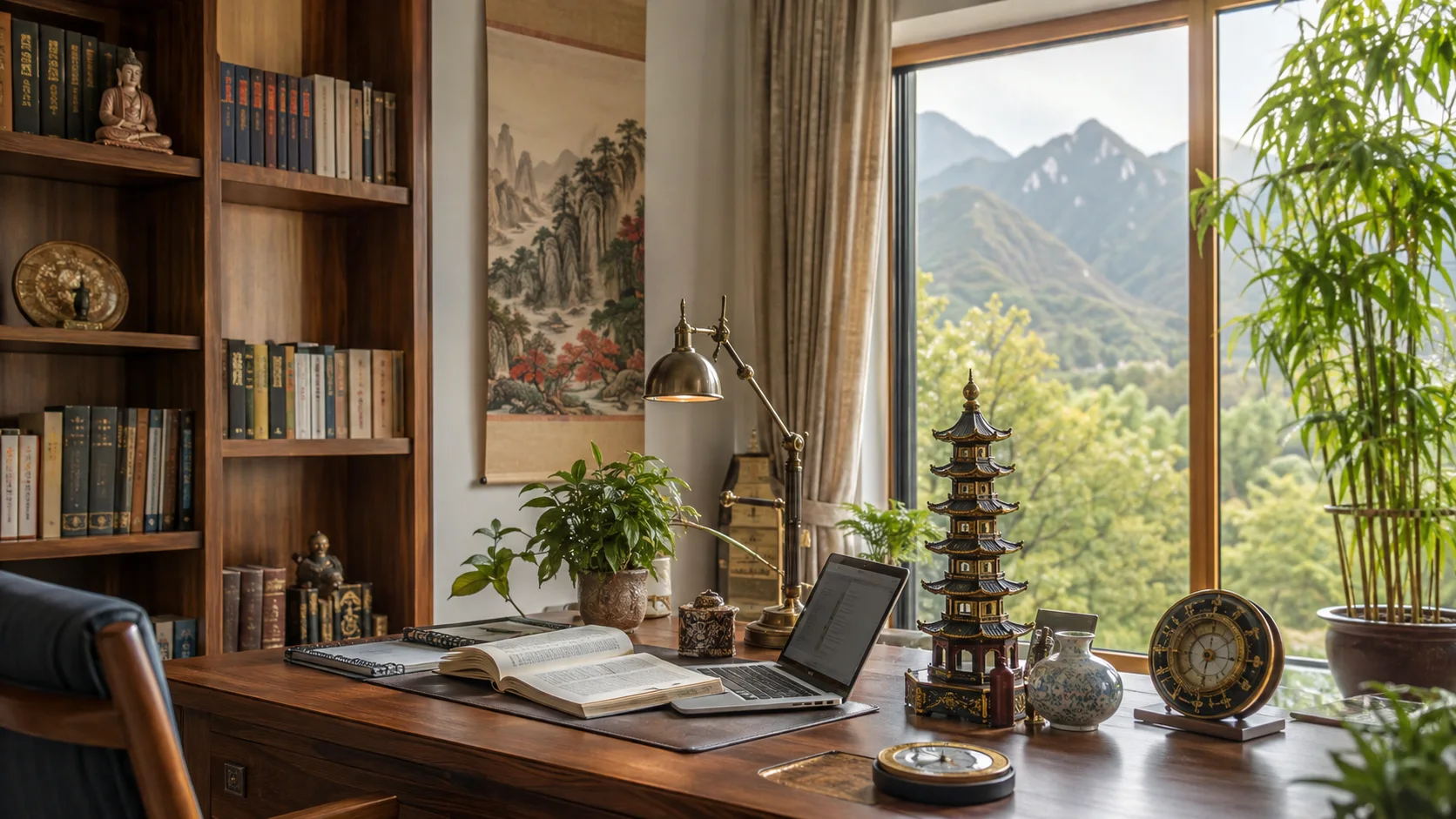
The "Literary Prosperity" sector in traditional Feng Shui — how to find it in your home and how to activate it for study.
The most important study Feng Shui question: which direction should a student face while studying, and why?
Chair placement, desk position, windows, doors, and the overall spatial arrangement that supports focused learning.
Why the position of doors and windows in a study room matters — light, airflow, distraction, and the "looking into empty space" problem.
The traditional concept of wangkong (望空) — when a student's position creates an energetically unsupported study environment.
How modern appliances interact with traditional study Feng Shui principles — and what to prioritize.
How bookshelves should be arranged — open vs. closed shelving, overflowing books, and the energy of organized vs. chaotic study materials.
Imagery, wall decorations, and artwork — what traditional Feng Shui recommends (and warns against) for a student's study space.
Beyond desk placement — the parental behaviors and home environment factors that traditional Feng Shui associates with academic support.
What families have traditionally done before exams — from room arrangement to diet to ritual practices and their cultural meaning.