Explore
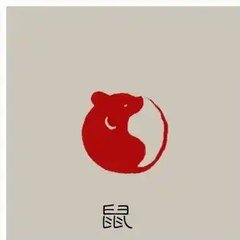
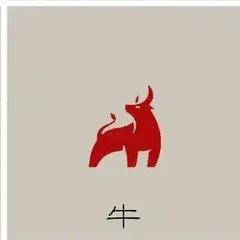
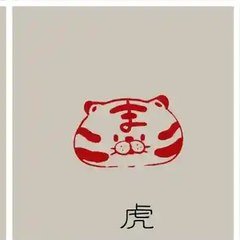
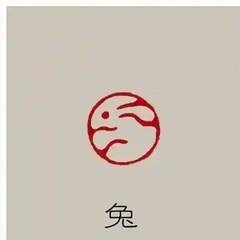
All 12 Chinese Zodiac Signs
Click any sign to learn about personality, compatibility, famous people, and annual fortune.
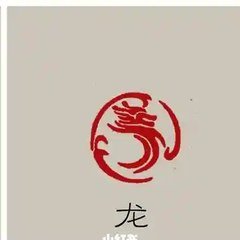
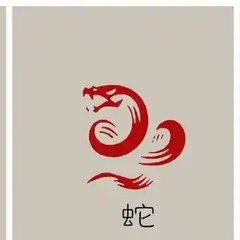
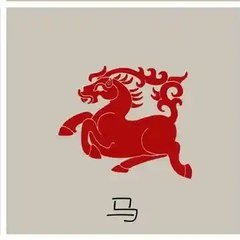
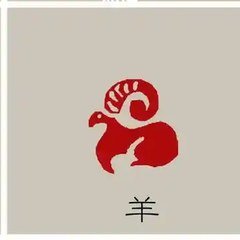
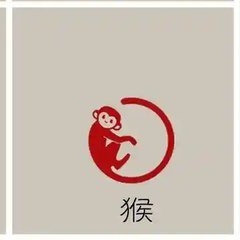
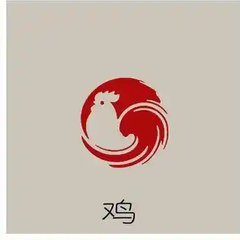
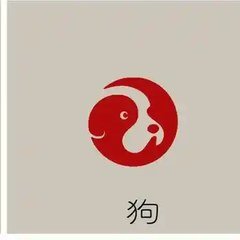
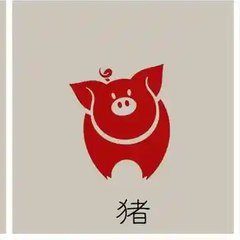
Traditional Chinese Astrology
Find your Chinese zodiac sign, five element, and GanZhi year. We use LiChun — the year boundary used in traditional BaZi / Four Pillars calculations.
Day, month, and year are all you need.
Calculating...
Strengths
Challenges
Compatibility
Chinese vs Western Astrology
Lucky Numbers & Colors
This calculator uses traditional Chinese metaphysics. Results are for cultural reference and entertainment only, not professional advice.
Explore
Click any sign to learn about personality, compatibility, famous people, and annual fortune.
Many Chinese zodiac websites use the Lunar New Year (Spring Festival) as the year boundary. This differs from traditional BaZi / Four Pillars practice.
Traditional BaZi (Four Pillars of Destiny) practitioners have long used LiChun (立春), the Start of Spring solar term, as the zodiac year boundary. This is based on solar position rather than the lunar calendar.
If you were born in January or early February, you may see a different result here than on other calculators — because this calculator uses the BaZi convention. We explain which system we use so you can decide what applies to you.
The Chinese Zodiac (生肖, Shēngxiào) is a 12-year cycle where each year is represented by an animal: Rat, Ox, Tiger, Rabbit, Dragon, Snake, Horse, Goat, Monkey, Rooster, Dog, and Pig. Each animal carries specific personality traits, elemental associations, and compatibility patterns rooted in thousands of years of Chinese cultural tradition.
Western astrology assigns a sign based on your birth month (roughly 30-day sun signs). Chinese Zodiac assigns a sign based on your birth year. However, professional Chinese astrology (BaZi) goes much deeper — your month, day, and hour of birth each have their own animal and element, forming a complete "Four Pillars" destiny chart. Think of the Chinese Zodiac year sign as the outer layer of a much richer system.
LiChun (立春, Start of Spring) falls around February 3-5 each year. In traditional Chinese metaphysics, this solar event — not the Lunar New Year — marks the true transition between zodiac years. If you were born in January or early February, this distinction can change your animal sign entirely. Our calculator uses LiChun, which is the method used by professional BaZi practitioners.
Each zodiac year also carries one of five elements (Wu Xing 五行): Wood, Fire, Earth, Metal, and Water. These cycle in two-year pairs — so you'll see "Wood Rat," "Fire Ox," etc. Your element adds another layer to your personality profile. Wood people tend toward creativity and growth; Fire people toward passion and leadership; Earth toward stability; Metal toward precision; Water toward wisdom and depth.
In the Chinese system, each year alternates between Yang (阳, active energy) and Yin (阴, receptive energy). Yang years tend to produce outward, assertive personalities; Yin years produce more inward, reflective ones. This is determined by your Heavenly Stem (天干), which cycles through 10 positions — odd-numbered stems are Yang, even-numbered are Yin.
Chinese astrology and the Five Elements system are cultural and philosophical frameworks, not scientific disciplines. They offer a lens through which traditional Chinese culture understood personality, timing, and life patterns — much like Western astrology, Myers-Briggs, or the Enneagram. Our calculator presents these traditions accurately; how you choose to apply them in your life is entirely up to you.
The Archetype Library
Most zodiac sites tell you what will happen. This library uses the 12 animal archetypes as mirrors — to help you see how you operate, where your strengths turn to shadows, and what ancient Chinese wisdom has observed about your patterns for over a thousand years.
Compare all 12 signs' strength × shadow pairs in one view. See how each gift becomes the thing that holds you back.
Ancient wisdom from the Analects, Dao De Jing, and Zhuangzi — filtered by what you're dealing with today.
240 relationship nodes mapping how each sign operates across ambition, trust, conflict, money, loss, power — and 15 more dimensions of human behavior.
Go beyond the year sign. Your full BaZi chart encodes your Month, Day, and Hour Pillars — the complete map of your elemental nature.
How the Archetype Framework Works
Every animal carries a cultural identity built over 2,000 years — mythology, historical associations, folk observations.
Beneath the symbol is a human archetype — a recurring pattern of energy that operates in real people, not just those born in that year.
Each archetype has three versions: Balanced (the gift in action), Excessive (the gift pushed too far), and Repressed (the gift shut down).
The shadow is not always present — it gets activated. Knowing your triggers is the difference between awareness and repetition.
Chinese folk tradition says each zodiac animal lacks one biological feature. The observation mirrors a human nature insight.
The lesson is not "be better." It is: learn to use your core force without needing to prove it.