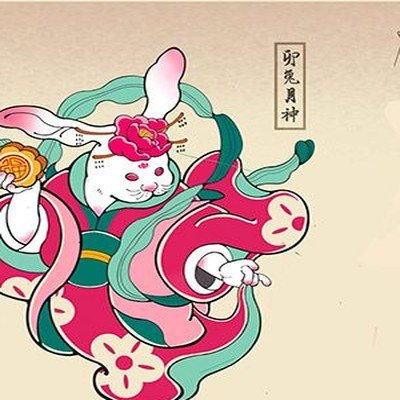
Chinese Zodiac · Sign 4 of 12
Gentle, graceful, and sharper than anyone guesses
Tù · Mao (卯) · Wood · Yin
The Rabbit is the zodiac's diplomat: graceful, perceptive, and possessed of a social intelligence that works through suggestion rather than assertion. This is Yin Wood energy — growth through accommodation rather than force, roots spreading quietly under the surface. Rabbits are consistently underestimated because their elegance reads as softness. This is a mistake. Beneath the composed exterior is a precise mind that misses nothing, a strong aesthetic sense, and a determination that simply doesn't announce itself through noise.
Every strength in the Rabbit archetype carries a shadow — the same quality turned one degree too far. These are editorial interpretations, not clinical assessments.
The Rabbit archetype is often driven by a need for comfort, safety, and relational peace. They are rarely seeking power; they are seeking a life where they do not have to armor themselves.
Each Rabbit carries a secondary element modifier from the 60-year GanZhi cycle. Your birth year determines which type of Rabbit you are.
| Element | Birth Years | Key Personality Modifier |
|---|---|---|
| Wood | 1915, 1975 | Creative, idealistic, and growth-oriented. More flexible than other Rabbit types. |
| Fire | 1927, 1987 | Passionate, charismatic, and driven. The most intense expression of Rabbit energy. |
| Earth | 1939, 1999 | Stable, practical, and dependable. Grounded and methodical among Rabbits. |
| 1951, 2011 | Principled, determined, and structured. The most disciplined type of Rabbit. | |
| Water | 1963, 2023 | Intuitive, adaptable, and socially fluid. The most perceptive Rabbit variant. |
The Rabbit is a devoted and romantic partner who brings elegance and genuine emotional attentiveness to relationships. They create beautiful environments, remember meaningful details, and have a gift for making their partners feel truly seen. The challenge is their discomfort with direct confrontation — small grievances get swallowed until they accumulate into distance. The Goat shares the Rabbit's appreciation for beauty and gentle rhythm of life. The Dog is the Rabbit's secret friend — a grounding, loyal presence. The Pig partnership is warm, affectionate, and mutually nurturing.
Rabbits thrive in fields that value discernment and refinement: law (particularly negotiation and mediation), diplomacy, counselling, education, art, fashion, interior design, and writing. Their eye for quality and discomfort with disorder makes them excellent editors, curators, and designers. Rabbits manage money carefully and with an instinct for value — they rarely make dramatic financial errors. However, their risk aversion can mean missed opportunities that required boldness to seize.
Yin Wood governs the liver like all Wood signs, but also the nervous system and skin. Rabbits are sensitive to emotional stress, which manifests physically in skin conditions, digestive disturbance, and nervous tension. Their strong preference for beautiful, calm environments is not vanity — it is genuine health maintenance. Noise, disorder, and emotional conflict deplete them rapidly. Regular time in nature, particularly among trees and water, restores Rabbit energy effectively.
These are traditional associations from Chinese cosmology and cultural metaphor — not medical claims or health advice.
2026 Horse year brings social opportunities for Rabbits — Horse energy amplifies charm and connection. Romantically, this is one of the Rabbit's better years for meaningful relationships. Career moves cautiously but solidly. Financial caution is warranted in the first half of the year; the second half opens more clearly.
All fortune readings are traditional cultural perspectives for entertainment. Not a substitute for professional advice.
Notable Rabbits
The Rabbit won its position in the race through cleverness and agility. Faced with a wide river, it found stepping stones and leapt across — nearly falling when the last stone proved too far. At that moment, a log floated by and the Rabbit landed on it, drifting to shore. Some versions say the Dragon — already fourth — breathed a gust of wind that pushed the log to shore. This detail matters: the Rabbit succeeds partly through its own resourcefulness and partly through relationships with those who complement its gifts.
The same energy expresses differently depending on circumstance. Most people move between all three — the question is which state you spend the most time in, and what moves you between them.
May move through conflict like a quiet diplomat. At a tense family dinner, they might notice the rising heat, pause, offer tea, and shift the conversation with a gentle observation. They listen before speaking and set soft boundaries without needing to win.
May over-accommodate to keep the peace, saying yes when they want to say no. At work, they might take on everyone's extra tasks, then complain quietly from the kitchen. They often avoid direct confrontation until resentment leaks out through passive comments or delayed decisions.
When their anger has been buried too long, they may suddenly go cold, withdraw completely, or deliver a cutting remark that shocks everyone. In more rigid environments, they might become overly controlling about small details, trying to create safety through perfectionism.
True harmony is not the absence of friction. They may learn that honest expression of needs creates deeper peace than silent self-sacrifice.
Interactive · Self-Reflection
7 scenarios. No right answers. Your pattern reveals which of the three Rabbit states you currently spend the most time in.
Chinese folk tradition holds that each of the 12 zodiac animals is missing one thing. The biological observation and what it might mirror in human nature.
The Rabbit's upper lip is split down the center — the "three-petal mouth" — an evolutionary adaptation that allows its large front teeth to protrude and efficiently strip bark and grass.
The Rabbit archetype cannot fully close the gap. The vulnerability shows. No matter how composed the surface, the Rabbit's exposure is structurally present — and may be part of what makes it so perceptive of others' vulnerabilities.
The human nature reflection is a ChineseFortuneTools editorial interpretation — not a claim of classical or scientific origin.
A Question for You
"What would you risk if you were certain those you love would still stay?"
Classical Chinese philosophy has observed the patterns behind the Rabbit archetype for centuries. These quotes resonate with the Rabbit's nature.
"To know that you know, and to know that you do not know, is true knowledge."
"Virtue is never alone; it always has neighbors."
"Being and non-being give rise to each other; difficult and easy complete each other; long and short shape each other; high and low incline toward each other; sound and voice harmonize with each other; front and back follow each other."
These Chinese idiom stories illuminate the same human patterns that define the Rabbit archetype — told over thousands of years because they refuse to stop being true.
Origin: Warring States (Hanfeizi)
A lazy farmer in the state of Song notices a rabbit dash into a tree stump and drop dead, and thinks the gods have offered him a daily feast. He abandons his hoe, sits under the stump day after day, but no rabbit ever appears again. His weeds grow high, and the village mocks him, yet he refuses to move. The story becomes a warning that chance windfalls cannot replace hard labor.
Origin: Western Han (Xin Xu)
Lord Ye had decorated his entire estate with dragons—embroidered on robes, carved into beams, painted on walls, and woven into curtains. When the real Dragon of the sky, flattered and honest, descended to visit him and leaned into his window, Lord Ye's face turned white and he bolted in terror. The dragon realized that this man only loved the image, not the reality, and flew away, leaving the coward trembling among his fakes.
Origin: Warring States Period (Zhuangzi)
In ancient Yue, a beauty named Xi Shi often suffered from chest pain and frowned, which made her look even more enchanting. A plain-looking woman named Dong Shi, hoping to capture the same charm, mimicked Xi Shi's frown and hand-on-heart gesture wherever she went. But her exaggerated performance only made her look hideous, causing neighbors to lock their doors and flee at her approach. Instead of enhancing her appearance, her foolish imitation exposed her lack of self-awareness and turned her into a laughingstock.
15 — Reflection
"What would you risk if you were certain those you love would still stay?"
This question belongs to the Rabbit archetype — not as a verdict, but as an invitation. Your zodiac doesn't define you. It gives you a story to explore.
Recent Years of the Rabbit: 1987, 1999, 2011, 2023. The next Year of the Rabbit begins February 2035. Element variants: 1987 Fire Rabbit, 1999 Earth Rabbit, 2011 Metal Rabbit, 2023 Water Rabbit.
Find your sign by birth date using our LiChun-accurate algorithm.
Your complete Year, Month, Day & Hour pillars chart.
Find auspicious dates for weddings, moving, business, and more.
How the Yin Fire Goat year (丁未) affects Rabbit — career, love, wealth & health outlook.