Chinese Zodiac · Sign 10 of 12
Precise, confident, and meticulous about everything that matters
Jī · You (酉) · · Yin
The Rooster is the zodiac's perfectionist — observant, precise, and with standards that very few people or situations actually meet. This is Yin Metal energy: refined, sharp, and exacting. The Rooster notices everything. It also has opinions about everything — informed, detailed opinions — which it shares readily and at length. This directness reads as arrogance to those who can't match the Rooster's standard of discourse, but to those who can, it is genuinely refreshing. The Rooster doesn't perform confidence; it is simply, sometimes infuriatingly, right.
Every strength in the Rooster archetype carries a shadow — the same quality turned one degree too far. These are editorial interpretations, not clinical assessments.
The Rooster archetype is often driven by a need for excellence and visible integrity. They want to feel that they are not just good, but correct, and that their standards are respected.
Each Rooster carries a secondary element modifier from the 60-year GanZhi cycle. Your birth year determines which type of Rooster you are.
| Element | Birth Years | Key Personality Modifier |
|---|---|---|
| Wood | 1945, 2005 | Creative, idealistic, and growth-oriented. More flexible than other Rooster types. |
| Fire | 1957, 2017 | Passionate, charismatic, and driven. The most intense expression of Rooster energy. |
| Earth | 1909, 1969 | Stable, practical, and dependable. Grounded and methodical among Roosters. |
| 1921, 1981 | Principled, determined, and structured. The most disciplined type of Rooster. | |
| Water | 1933, 1993 | Intuitive, adaptable, and socially fluid. The most perceptive Rooster variant. |
The Rooster is a loyal and dedicated partner who takes relationships extremely seriously — perhaps too seriously, sometimes, for lighter-spirited companions. They show love through acts of service, meticulous attention to their partner's preferences, and consistent reliability. The Ox provides the stability and mutual work ethic that the Rooster respects deeply. The Snake partnership is elegant and intellectually well-matched — both signs appreciate refinement and operate with similar precision. The Dragon is the Rooster's secret friend — a complementarity where Dragon vision and Rooster execution create exceptional collaborative potential.
Roosters are exceptional in any field that rewards precision, presentation, and meticulous work: surgery, accountancy, law, military service, journalism, fashion, restaurant management, and public speaking. The Rooster's ability to spot errors, inconsistencies, and inefficiencies makes it a valuable quality controller in any organization. Financially, Roosters are careful and methodical — they track expenditure, research investments, and rarely make decisions without thorough analysis.
Yin Metal governs the lungs and skin, like Yang Metal Monkey. Rooster people are susceptible to respiratory and skin conditions, particularly during periods of stress. The Rooster's critical and detail-oriented mind tends toward anxiety when standards aren't met — and they rarely are met to the Rooster's satisfaction. Practices that calm and release the nervous system (meditation, tai chi, time in nature without agenda) are particularly valuable.
These are traditional associations from Chinese cosmology and cultural metaphor — not medical claims or health advice.
Horse year creates some friction with Rooster precision — Horse energy moves faster than the Rooster finds comfortable. Career progress continues for Roosters with the patience to execute plans methodically while the Horse year's noise provides cover for careful maneuvering. Financial discipline pays off in Q3-Q4. Relationships benefit from the Rooster releasing some of its critical instinct.
All fortune readings are traditional cultural perspectives for entertainment. Not a substitute for professional advice.
Notable Roosters
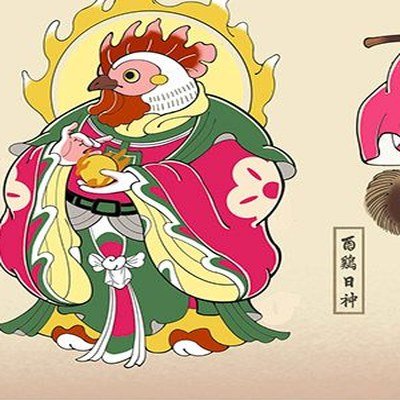
The Rooster crossed in tenth place, having helped build the raft with the Monkey and Goat. In Chinese agricultural culture, the Rooster holds a deeply practical significance — its morning crow was the alarm clock of civilization for thousands of years, marking the day's beginning and calling farmers to work. The Rooster is therefore associated with diligence, punctuality, and the courage to announce the truth (dawn) even in darkness. The red comb represents courage; the Rooster is one of the animals depicted on traditional door gods.
The same energy expresses differently depending on circumstance. Most people move between all three — the question is which state you spend the most time in, and what moves you between them.
At a dinner party, the rooster might notice when someone's glass is empty and refill it without being asked, then tell a witty story that makes everyone laugh. They often speak with clarity, keep commitments, and can adjust when plans change, treating mistakes as information rather than failures.
When a project hits a snag, the rooster might launch into a detailed critique of every misstep, replaying the error and lecturing coworkers about the correct procedure. They may redo others' work late into the night, boast about their standards, and complain that no one cares as much as they do.
After being ignored once too often, the rooster might freeze in meetings, rehearse sentences internally, and then stay silent. They may take on extra chores to prove value, avoid any visible flaw, and quietly resent colleagues while appearing compliant, all while muttering self-critical thoughts at home.
Your worth isn't a performance. True confidence means letting yourself be imperfect, listening more, and knowing you are valuable even when no one applauds.
Interactive · Self-Reflection
7 scenarios. No right answers. Your pattern reveals which of the three Rooster states you currently spend the most time in.
Chinese folk tradition holds that each of the 12 zodiac animals is missing one thing. The biological observation and what it might mirror in human nature.
Birds have kidneys but no bladder. Uric acid is produced and passed immediately with solid waste through the cloaca — there is no storage, no separate release, no control of timing. Everything passes through at once.
The Rooster archetype may struggle with internal holding — emotions, information, reactions — pass through immediately. The Rooster says what it thinks when it thinks it. This is either brilliant timing or terrible timing, with little in between.
The human nature reflection is a ChineseFortuneTools editorial interpretation — not a claim of classical or scientific origin.
A Question for You
"What is the flaw you see in others that you are afraid to see in yourself?"
Classical Chinese philosophy has observed the patterns behind the Rooster archetype for centuries. These quotes resonate with the Rooster's nature.
"A noble person does not seek to eat to the full or live in ease; he is diligent in work and careful in speech, and seeks the company of the virtuous to correct himself—such can be called fond of learning."
"To know that you know, and to know that you do not know, is true knowledge."
"Standing on tiptoe is not steady; striding forward does not walk. Those who self-display are not illumined; those who self-affirm are not distinguished; those who self-boast achieve no merit; those who self-approve do not last."
These Chinese idiom stories illuminate the same human patterns that define the Rooster archetype — told over thousands of years because they refuse to stop being true.
Origin: Warring States (Zhuangzi)
A youth from the town of Shouling traveled to Handan, the splendid capital of Zhao, to admire the graceful gait of its citizens. For weeks he practiced every step, trailing the locals and modulating his pace, but he could never capture their style. In panic, he tried too hard, and in trying to imitate the astonishing Handan walk, he completely forgot his natural gait. Finally he had to crawl all the way home, an absurd spectacle of a man who had lost himself in the pursuit of another's way.
Origin: Warring States Period (Zhuangzi)
A monkey keeper fed his troop four chestnuts each morning and three each evening, but the monkeys flew into a rage at the unfairness of the evening share. The keeper, quick to respond, proposed giving them three chestnuts in the morning and four in the evening instead. Merely reversing the numbers instantly satisfied the monkeys, who failed to see that the total remained unchanged. The keeper laughed at how easily their perception could be manipulated by a simple rearrangement of the same amount.
Origin: Pre-Qin Period (Shanhaijing)
The youngest daughter of the Flame Emperor, a girl named Nuwa, drowned while playing in the Eastern Sea, consumed by the waves that would become her deadly foe. After death, her spirit transformed into a little bird called Jingwei, with a patterned head and white beak, who carried twigs and pebbles across the sky, determined to fill up the ocean that had taken her life. Every day she flew between the distant mountains and the sea, dropping her tiny offerings into the vast water without a sign of stopping. Her endless defiance against an impossible enemy became a symbol of unyielding grit and unquenchable vengeance.
15 — Reflection
"What is the flaw you see in others that you are afraid to see in yourself?"
This question belongs to the Rooster archetype — not as a verdict, but as an invitation. Your zodiac doesn't define you. It gives you a story to explore.
Recent Years of the Rooster: 1993, 2005, 2017, 2029. The next Year of the Rooster begins February 2029. Element variants: 1993 Water Rooster, 2005 Wood Rooster, 2017 Fire Rooster, 2029 Earth Rooster.
Find your sign by birth date using our LiChun-accurate algorithm.
Your complete Year, Month, Day & Hour pillars chart.
Find auspicious dates for weddings, moving, business, and more.
How the Yin Fire Goat year (丁未) affects Rooster — career, love, wealth & health outlook.