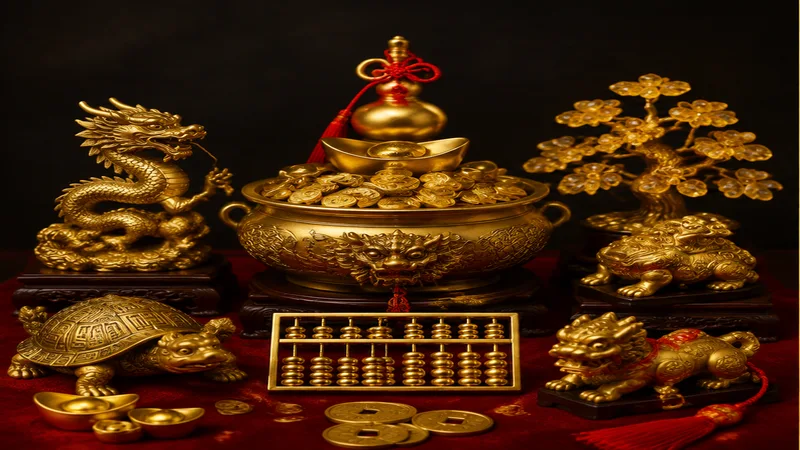
Six Things You Should Never Place Carelessly If You Want Strong Wealth Energy
Feng Shui grew from the idea that a room’s arrangement can either feel settled or unsettled. This guide revisits six familiar placement cautions—from sharp leaves and dried bouquets to stopped clocks and reflecting mirrors—and pairs each image with practical checks for clear walkways, restful bedrooms, reliable lighting, and well-kept objects. The symbolism can sharpen intention; it cannot guarantee income or financial results.
1. The Cactus Bedroom: A Thorny Problem for Your Finances
Plants are often used in Feng Shui to represent growth. Cacti and other spiky plants are traditionally treated with caution in bedrooms because their texture can feel visually busy or uncomfortable near a sleeping area. If you enjoy them, place them where they are safe, well-lit, and easy to care for; choose a softer-leaved plant near the bed if that feels more restful. This is a comfort and symbolism choice, not a prediction about finances.
“Sharp objects in sleeping spaces are like tiny arrows aimed at your financial security. Remove them, and you will feel an immediate lightness in your wallet and your mind.”
2. Dried Flowers: Stagnant Beauty That Halts Abundance
Dried flowers can be meaningful keepsakes, yet dust and brittle stems may make a room feel neglected. In traditional symbolism they represent a completed cycle, while fresh or high-quality artificial arrangements suggest renewal. Keep whichever option suits your space clean, stable, and out of walkways; no arrangement can ensure an income stream.
3. The Broken Clock: Time Stops, Money Stagnates
A clock that is broken, stopped, or ticking inaccurately is more than a minor inconvenience; it is a serious hindrance to wealth energy. Time is a direct representation of your life’s momentum. In Feng Shui, a non-working clock tells the universe that you have given up on progress, that you are stuck in a static moment. Wealth requires movement—money circulates, investments grow, careers advance. If your clock is frozen at 3:47, you are energetically freezing your financial growth at that moment. Clocks also govern our discipline and punctuality, which are crucial for career success and business deals. A broken clock in a home office or near your personal workspace can cause you to miss deadlines, feel perpetually rushed, or lose track of important appointments. Even in a living room, a stopped clock creates a subtle dissonance in your mind, making you feel late or disorganized even when you are not. The fix is simple: repair or replace any clock that is not keeping accurate time. Do not keep them as decorative pieces. A working clock, ideally with a smooth second hand (not a loud ticking one for bedrooms), keeps the energetic pulse of your home alive and ensures that your efforts translate into timely rewards. Remember, time is money—so treat your clocks as guardians of your schedule and your net worth.
4. Mirror Facing Door: The Reflection That Repels Wealth
Mirrors are powerful Feng Shui tools; they can double your abundance or scatter it, depending on placement. One of the most classic mistakes is a mirror facing door—whether that is the front door, bathroom door, or bedroom door. When a mirror directly faces the main entrance, it reflects the incoming chi right back out through the door. In practical terms, this means the wealth and opportunities that try to enter your home are immediately repelled, as if the house is slamming the door on prosperity. You may notice that money seems to come in but quickly leaves, or that job offers and business prospects somehow slip away at the last minute. The mirror creates a false “blockade” at the threshold. Similarly, a mirror facing your bedroom door can bounce chaotic energy into your sleep, leading to restless nights and poor decisions. The exception is a mirror in a dining room or near a cash register, where reflection multiplies abundance. To correct a mirror facing door, you have three options: move the mirror to a solid wall that does not align with any entrance, place a screen or plant between the mirror and the door to break the direct line of sight, or angle the mirror slightly so it shows a wall or a pleasant scene instead of an open doorway. Never try to “fix” it by turning the mirror away—you want to redirect chi, not eliminate it entirely.
5. Toilet Uncovered: The Silent Drain on Your Cash Flow
While the bathroom is not the most glamorous room in your home, it plays a critical role in your wealth energy. Water is a primary symbol of money in Feng Shui, and toilets are the ultimate water drainage point in a house. Leaving the toilet uncovered—meaning the lid is up when not in use—creates an open channel that continually siphons off your financial resources. Think of it like a faucet that is always slightly dripping: you may not notice the loss day-to-day, but over time, it adds up to a significant leak. In Feng Shui practice, the toilet is a “drain” that carries away waste, both physical and energetic. An uncovered toilet invites your wealth energy to swirl away into the pipes, never to be seen again. This is especially damaging if your bathroom is located in the southeast wealth corner of your home or visible from the front entrance. The solution is almost too easy: always put the lid down after using the toilet. Also keep the bathroom door closed as much as possible, and hang a beautiful mirror or artwork outside the bathroom to deflect negative chi. You can further remedy the situation by placing a small plant, like a fern or a bamboo, inside the bathroom to absorb the draining energy and convert it into fresh growth. A covered toilet and a closed bathroom door are simple habits that protect your income from being flushed away.
6. Objects That Block Wealth: Clutter, Heavy Furniture, and Wrong Symbols
Finally, we must address the broad category of objects that block wealth. These are items that physically or energetically impede the smooth flow of chi through your home, especially in the areas associated with prosperity. First on the list is clutter. Piles of old papers, broken electronics, unused furniture, or stacks of boxes in hallways or corners act like dams in a river—they stop the movement of energy and create stagnant pockets. In Feng Shui, stagnation in your space directly mirrors stagnation in your bank account. Walk through your home and identify any spot where you cannot easily walk, where dust collects, or where you have not touched something in over a year. Those are your wealth blockers. Second, heavy furniture such as massive sofas, wardrobes, or bookshelves that are placed directly in front of windows or doorways block the entry of light and chi. Windows are considered “eyes” for opportunity, and doors are the “mouth” for prosperity. If you block them, you are literally closing yourself off to potential. Third, make sure you do not have inappropriate symbols like images of poverty, lonely landscapes, or weapons in your wealth corner. A picture of a barren desert or a solitary boat can convey a lack of abundance. Instead, fill that space with symbols of richness—a bowl of coins, a round green plant, a flowing water fountain, or a cluster of ripe fruit. The key is to keep thoroughfares clear, furniture low or repositioned to allow a meandering path, and decorative items that actively evoke prosperity, not scarcity. By removing these objects that block wealth, you re-open the airway for money to circulate, multiply, and remain easily within your grasp.
“Feng Shui is not about superstition; it is about the resonance between your environment and your mind. Every object either whispers ‘abundance’ or ‘lack’ to your subconscious. Choose the whispers wisely.”
Final Thoughts on Cultivating Strong Wealth Energy
Wealth energy is not something you force; it is something you allow. By avoiding these six careless placements—the cactus bedroom, dried flowers, broken clock, mirror facing door, toilet uncovered, and any objects that block wealth—you remove the most common energetic obstacles that keep money away. Start with a quick audit of your own home. Look at your sleeping area, your front entry, your bathroom, and your main living space. Ask yourself: Are there anything sharp, dead, stopped, reflective, draining, or obstructing? If you find even one of these issues, correct it today. Then, intentionally add elements that promote flow: fresh air, natural light, living plants, and a small water feature (like a tabletop fountain) in the southeast area of your main room. Be consistent in your maintenance—simply clearing out clutter once a month can make a noticeable difference in how opportunities seem to find you. Over time, you will feel your home becoming lighter, more vibrant, and more receptive to financial blessings. Remember, in Feng Shui, your home is a living mirror of your life. When you treat it with respect and intention, it reflects that care back to you in the form of robust wealth energy, steady income, and a deep sense of security.
Frequently Asked Questions
The answers below describe traditional symbolism and practical room-care choices; they are not predictions about income, luck, or investment results.