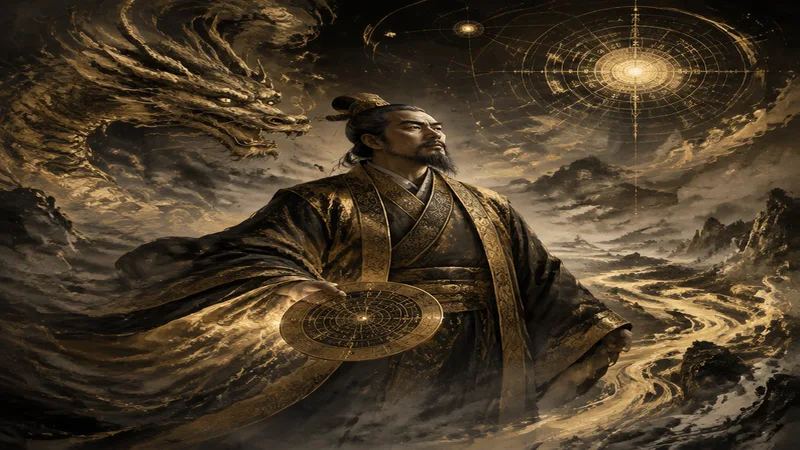
The Legend of Lai Buyi – Feng Shui Hero of the Song Dynasty
When people speak of the greatest geomancers in Chinese legend, few names resonate as powerfully as Lai Buyi (赖布衣). Tradition places him in the Song dynasty, where stories portray a plain-clothed master who used landscape knowledge to help ordinary people. He became a feng shui hero in folk memory—not a verified biography, but a moral tale about using knowledge with restraint. This article explores his legends, his encounters with corrupt officials, and the practical home habits later readers associate with his name.
Who Was Lai Buyi? A Legendary Master Turned Folk Hero
Lai Buyi was born in the late Southern Song dynasty, roughly around the 12th century, in present-day Jiangxi province – a region already famous for producing exceptional Feng Shui masters. His birth name was Lai Fenggang, but the title "Buyi" literally means "commoner" or "plain-clothed one." This was not a sign of low status; rather, it reflected his lifelong commitment to walking among everyday people, sharing his knowledge freely, and refusing to serve only the wealthy elite. In a time when Feng Shui was often reserved for emperors and aristocrats, Lai Buyi stood out as a legendary master who believed that good energy, or qi, should flow to every household, regardless of wealth or rank.
Historical records and folk traditions describe Lai Buyi as a man of profound insight and impeccable ethics. He studied the classical texts of the Form School, which emphasizes the physical shapes of mountains, water, and land, as well as the Compass School, which focuses on directional alignments and cosmic influences. However, his true genius lay in his ability to synthesize these schools into practical, down-to-earth advice. Unlike many court geomancers who used flowery language to obscure their meaning, Lai Buyi spoke plainly. He taught farmers how to position their homes to avoid flooding, merchants how to align their shops to attract prosperity, and families how to arrange their bedrooms to nurture health and harmony. This accessible approach is why he is remembered not only as a master but as a true folk hero.
Standing Up Against Corrupt Officials: The Moral Core of Feng Shui
One of the most famous stories about Lai Buyi involves a powerful and corrupt official who demanded a legendary “Dragon’s Lair.” In the tale, the site is said to promise generations of prosperity to whoever controlled it. That is the story’s dramatic folk claim, not a guarantee; the moral is that using Feng Shui to hoard power or harm others would poison the very qi the master hoped to understand.
Instead of complying, Lai Buyi publicly exposed the official's exploitative practices. He used his knowledge to protect ordinary people by helping them realign their homes to deflect the negative energy, or sha qi, that the official had attempted to direct against them. In one dramatic account, Lai Buyi planted a row of bamboo outside a poor village to shield it from the official's “poison arrow” – a straight road or sharp corner that was aimed at the villagers. The bamboo not only protected them but also turned the negative energy into beneficial sheng qi, allowing the village to thrive. This act cemented his reputation as a defender of justice, proving that genuine Feng Shui is never about domination, but about balance and benevolence.
Practical Feng Shui Principles from Lai Buyi's Teachings
Lai Buyi's core philosophy could be summarized in one sentence: "The best Feng Shui is a clear conscience." Yet he also left behind highly practical guidelines that remain incredibly useful today. Here are five principles directly attributed to his school of thought, which you can apply to your own living space:
- Respect the natural topography. Lai Buyi insisted that homes should follow the contours of the land, never fight them. If you build on a slope, face your main door toward the lowest point to let water and energy flow gently. Avoid building at the very top or bottom of a hill, as these positions create instability.
- Water must be controlled, not worshipped. Water represents wealth in Feng Shui. Lai Buyi taught that a clean, slow-moving stream or pond in front of your home is excellent. However, he warned against stagnant water (which brings illness) or rushing water directly at your door (which carries energy away too fast). A gentle curve is always better than a straight line.
- The kitchen is the heart of health. In the Song dynasty, the stove was sacred. Lai Buyi emphasized that the cook should never have their back to the door, as this causes anxiety and poor digestion. In modern terms, ensure you can see the entryway while cooking, or place a mirror behind the stove.
- Doors are the mouth of qi. Your front door should open into a bright, spacious, and uncluttered area. Lai Buyi advised that if a wall looms too close inside or outside the entrance, hang a round mirror to expand the space spiritually and dispel pressure.
- Harmony over luxury. Many of Lai Buyi's clients were poor farmers. He never told them to buy expensive remedies. Instead, he used local stones, plants, and simple mirrors. His lesson: Feng Shui is about arranging what you have with intention, not about accumulating objects.
The Five Secrets of Lai Buyi's "Secret Carved Dragon" Method
"When the dragon hides, the land is quiet. When the dragon moves, the land breathes. To find peace, you must learn to listen with your feet, not your ears." – Attributed to Lai Buyi
Lai Buyi's most famous written work is the Yi Long Jing (Secret Carved Dragon Classic), which outlines a unique method for identifying the vitality of a landscape. He identified five vital signs that even beginners can observe. First, look for green vegetation. A healthy, vibrant plant life indicates underground water and rich soil energy. Second, note the shape of hills. Round, rolling hills suggest gentle, maternal energy, while jagged, aggressive peaks generate harsh vibrations. Third, check for animal activity. If birds and small animals thrive in your garden, the qi is balanced. Fourth, observe the quality of light. A space that receives soft, diffused morning sunlight is far better than one with glaring afternoon heat. And finally, trust your own body. If you feel calm, alert, and comfortable in a space, that is the most reliable indicator of good Feng Shui. Lai Buyi believed that our intuition is a direct channel to the earth’s energy.
How to Apply Lai Buyi's Wisdom in Modern Homes
You do not need a mountain villa or a dynastic palace to benefit from Lai Buyi's teachings. Here are four simple, actionable steps inspired by his methods, tailored for today's apartments, suburban houses, and even studios.
First, clear the clutter near your entryway. In Lai Buyi's time, a blocked doorway was a sign of disaster. Today, it may be a pile of shoes, mail, or recycling. Spend ten minutes each day keeping that zone open and clean. Second, bring a living plant into your workspace. A healthy plant, such as a money tree or bamboo, echoes Lai Buyi's love for green vitality. It will improve air quality and remind you of nature's living energy. Third, fix any dripping faucet or leaky toilet. A steady drip is not just a utility waste – in Feng Shui, it represents a constant drain of your wealth and vitality. Repairing leaks is perhaps the fastest way to honor Lai Buyi's principles. Fourth, create a "quiet corner" in your home where you can sit for five minutes without any devices. This corner should have soft lighting and comfortable seating. It serves as your personal qi refueling station, a practice that Lai Buyi called "listening to the dragon's breath."
The Enduring Legacy of a True Folk Hero
Lai Buyi passed away centuries ago, but his influence has only grown stronger. In many Chinese communities, he is still venerated as a patron saint of Feng Shui, and his birthday is celebrated with incense and offerings. Yet his most important legacy is not a temple or a ritual. It is the ethical framework he gave to Feng Shui. Before Lai Buyi, too many practitioners used their skills to manipulate, intimidate, or extort. He changed that. By choosing to protect ordinary people and expose corrupt officials, he elevated the practice to a form of social justice. He proved that true mastery lies in humility, that the best compass is a compassionate heart, and that the highest goal of Feng Shui is not personal gain, but communal harmony.
When you arrange your furniture, plant a tree, or open a window to let in fresh air, you are participating in a tradition that Lai Buyi revitalized. He showed that we are all part of a living landscape, and that by respecting the earth, we respect ourselves. The next time you feel overwhelmed by modern stress, remember this humble Song dynasty master. Walk outside, feel the ground under your feet, and look for small ways to bring balance back into your space. That is the true spirit of Lai Buyi – a feng shui hero whose legend lives on in every mindful act of care for your home and your community.