Han Xin and the Dragon Vein Burial: Fact or Fiction?
Few stories in Chinese geomantic lore are as dramatic—or as debated—as the legend of Han Xin, the Han dynasty general, and his mother’s so-called “dragon mouth burial.” For centuries, Feng Shui practitioners and historians have asked: did Han Xin really seize an auspicious site on a dragon vein, and did that act shape his meteoric rise and tragic fall? The answer, as with many legendary stories, is layered with myth, moral allegory, and genuine geomagnetic principles. In this article, we will separate the historical kernel from the folkloric husk while exploring what the tale truly teaches about destiny, filial piety, and the responsible use of Feng Shui.
The Legend of the Dragon Mouth Burial
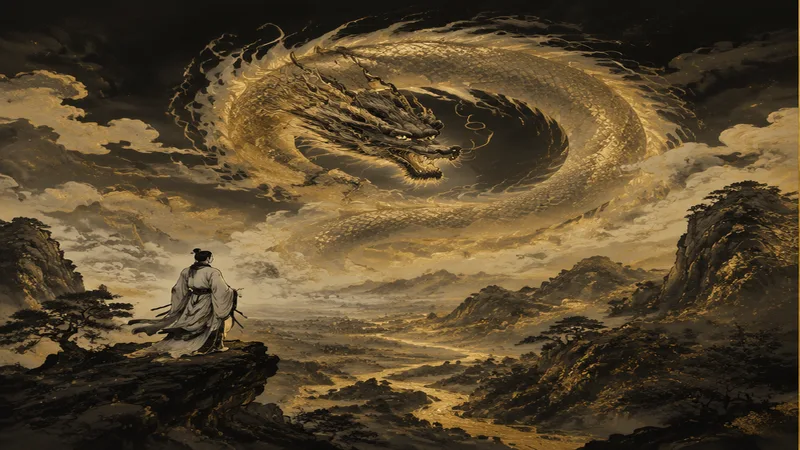
According to the most popular version of the story, Han Xin was a poor youth during the Qin dynasty collapse. His mother fell gravely ill, and a wandering Feng Shui master, impressed by Han Xin’s filial devotion, pointed to a hill shaped like a coiled dragon. “There,” the master said, “is a dragon vein of extraordinary power. If you bury your mother at its mouth—the dragon mouth burial—you will not only save her spirit but also receive the mandate of heaven. Your family will produce a king.”
Han Xin hesitated. The site was on private land, and he lacked the money to buy it. But driven by love for his mother and a flicker of ambition, he carried her body to the spot under cover of darkness and laid her to rest without ceremony. Within months, his fortunes reversed. He joined the rebel army, impressed Liu Bang with his military genius, and rose to become the most celebrated Han dynasty general—the architect of the Han Empire’s founding.
Yet the same dragon vein that lifted him also sealed his doom. A jealous courtier, aware of the geomantic secret, secretly dug a trench across the dragon’s “neck” to sever the vein. The vital energy (qi) was cut, and Han Xin’s luck collapsed. He was arrested, accused of treason, and executed in 196 BC. His family, the prophecy said, never produced a king—only a general who reached for a throne and lost everything.
“The dragon mouth burial is not a tool for personal ambition. It is a covenant between the living, the dead, and the land. Han Xin used it for glory; the land demanded balance in return.” — Traditional Feng Shui teaching
Historical Reality vs. Geomantic Myth
Historically, Han Xin’s life is well documented. He was indeed a brilliant strategist, known for the “crossing the river by sneaking through the pass” maneuver and the battle of Gaixia. But no contemporary record mentions a dragon vein or a maternal burial. The first written account of the legend appears centuries later, in the Tang and Song dynasties, when Feng Shui had matured into a complex metaphysical system and stories were used to validate its authority. The “dragon mouth burial” thus functions not as a factual event but as a legendary story that encodes deeper truths about Chinese cosmology.
What the legend gets factually wrong is the timing. Han Xin’s mother likely died long before his rise to power, and his family’s status was humble. There is no evidence he performed a clandestine geomantic rite. But “wrong” in a historical sense does not mean “false” in a symbolic sense. The story survives because it dramatizes a real observation: certain places do seem to concentrate fortune, and the circumstances of a burial—especially of one’s parents—are believed to influence descendants. The question is whether this influence is mystical destiny or a reflection of psychological and ecological factors.
The Real Feng Shui of the Dragon Vein
In classical Feng Shui, a dragon vein (long mai) is not a literal dragon. It is an underground flow of qi—life energy—that follows geological formations, water courses, and terrain contours. A dragon mouth is the point where this subterranean energy emerges at the surface, often at a hillside’s cliff, a concave fold, or the confluence of two valleys. Ancient practitioners looked for specific markers: rounded slopes, moist soil, lush vegetation, and a “breathing” sensation of air movement and gentle temperature changes.
Did Han Xin’s burial site exhibit these features? We cannot know. But the legend’s spatial language—coiled dragon, mouth point, severed neck—is pure geomythography. The dragon mouth is a “bright hall” (ming tang) where qi gathers. A proper burial there can harmonize the deceased’s spirit with the landscape, benefiting descendants. However, as the legend warns, such a site must be earned and treated with humility.
Destiny, Free Will, and the Mother Burial
The mother burial in Han Xin’s story is crucial. In Chinese filial culture, your mother is your first mountain, your first dragon vein. Her body, returned to the earth, symbolically connects you to the ancestral line. The legend insists that Han Xin’s heroic rise was not a reward for his own ability alone—it was a reward for filial piety. He risked death for her resting place. That act, not the physical mound of dirt, unlocked the vein.
This is where the “fact or fiction” question misses the point. The story is a moral and energetic model, not a legal document. Even a skeptical modern Feng Shui practitioner would say: yes, an auspicious site can support you, but it cannot override your own actions. Han Xin’s military skill was real. His arrogance and political naïveté were real. The dragon vein may have given him opportunities, but his destiny was shaped by his choices in the face of those opportunities.
- Fact: Han Xin was a real Han dynasty general of extraordinary talent.
- Fiction: There is no reliable record of a dragon mouth burial for his mother.
- Symbolic truth: The legend illustrates how perceived geomantic advantage can inflate ambition and lead to tragic overreach.
- Practical lesson: A burial site should be chosen with care and reverence, not as a gamble for power.
How to Approach an Auspicious Site Today
Even if you do not believe in dragon veins, the natural features associated with an auspicious site are objectively beneficial for a cemetery or memorial garden. Good drainage, gentle slope, shelter from harsh winds, proximity to water, and a view of the horizon all create a calming environment for mourners. Psychologically, a peaceful setting aids the grieving process and fosters a sense of continuity. Feng Shui’s advice to “sit with a mountain at your back and water in front” aligns with practical considerations of comfort and safety.
For those who do follow Feng Shui, the Han Xin story offers a corrective. Do not dig for a “dragon mouth” as if it were a lottery ticket. Instead, consult a skilled practitioner who reads the land’s qi in person. Look for vitality in the soil, not just the shape of the hill. And above all, honor your ancestors with sincerity. The dirt does not carry fortune; the relationship does.
“A dragon vein is not something you steal. It is something you become worthy of. Han Xin’s error was not in using the site—it was in forgetting that the site used him.” — Modern geomantic commentary
Conclusion: The Legend Lives as a Teaching Tool
So, is Han Xin and the dragon vein burial fact or fiction? Strictly speaking, it is fiction—a later embellishment upon a historical career. But as with all great geomantic legends, the exaggeration carries a core of practical wisdom. The land has power. Our ancestors matter. Ambition without ethics corrupts. Destiny is not fixed; it is a conversation between heaven, earth, and the human heart.
When you stand on a hillside and feel the quiet hum of a deep fold in the earth, you are experiencing something real—whether you call it a dragon vein or simply the ancient memory of the land. Han Xin’s story asks you to pause before you act. Is this site a blessing to be shared, or a secret to be hoarded? The earth always answers. In that sense, the dragon mouth burial is not a historical event but a perennial truth. We create our own fortune by the respect we show to the world around us and the people who came before us.