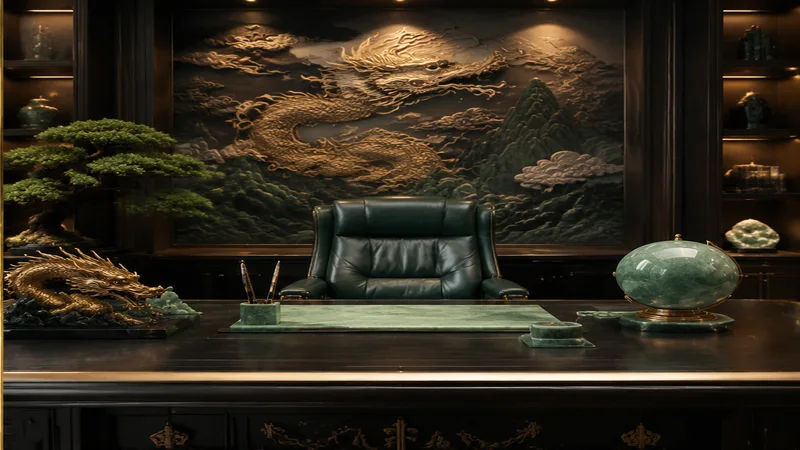
Where Should an Office Desk Be Placed?
Your desk is the place where you spend much of your working day, so it naturally receives considerable attention in traditional Feng Shui.
One of the most common concerns is placing a desk directly beside a large window. Modern offices often have floor-to-ceiling glass windows. They look attractive and provide excellent natural light, but a desk directly beside a busy window may not always be ideal.
From a traditional Feng Shui perspective, windows are openings through which both positive and negative environmental influences can enter. If the window faces a busy street, employees may constantly hear:
- Traffic and construction
- Footsteps and conversations
- Deliveries and mechanical noise
- Sirens and outdoor activity
These interruptions can make concentration more difficult. There is also a practical privacy concern — employees sitting directly beside a highly visible window may expose computer screens, documents, or conversations to people outside.
A better arrangement is to keep some distance between the desk and window while using blinds or curtains when necessary.
What Does the Color of Your Desk Mean?
Traditional Chinese metaphysics associates colors with the Five Elements: Wood, Fire, Earth, Metal, and Water.
- Fire: red, purple
- Earth: yellow, brown, beige
- Metal: white, gold, silver
- Water: black, blue, gray
- Wood: green, cyan
Some Feng Shui traditions recommend choosing desk colors according to a person's elemental profile. For example, a person associated with Wood may prefer green tones, while someone associated with Water may favor blue or dark colors.
However, you do not need to turn your office into a Five Elements laboratory. In modern interior design, color should first support visual comfort, brand identity, concentration, professionalism, and lighting conditions. A subtle use of traditional colors is often more effective than covering an entire office in a single symbolic color.
Is It Good to Sit With Your Back to a Large Window?
This is one of the most frequently discussed office Feng Shui arrangements. Imagine sitting at a desk with a large glass window directly behind you. You may have a beautiful view, but traditional Feng Shui regards the empty space behind a person as a lack of support.
The traditional ideal is often described as having a "mountain behind and water in front." In an office, the "mountain" can be represented by:
- A solid wall
- A substantial cabinet
- A high-backed chair
- A partition or stable architectural structure
The idea is symbolic: your back should feel protected rather than exposed. There is also a psychological explanation — when people sit with their backs toward an open area, they cannot easily see who is approaching. Some people naturally feel more alert or distracted as a result. If your desk must face away from a window, a screen or partition can provide a stronger sense of privacy.
How Should an Executive Office Window Be Designed?
The executive office deserves special attention because senior managers often need both concentration and privacy. Traditional Feng Shui tends to be cautious about offices with windows on opposite sides because excessive transparency may create an overly exposed environment.
In practical terms, excessive sunlight can also create:
- Screen glare and eye discomfort
- Heat and uneven lighting
- Reduced concentration
Curtains, blinds, or adjustable shades can solve many of these problems. If the only window faces north, traditional Feng Shui may consider the lack of direct sunlight unfavorable. Modern office design offers a straightforward solution: use warm interior lighting, brighter surfaces, and carefully positioned furniture to compensate for limited daylight.
What Is the Ideal Executive Desk Position?
A traditional Feng Shui-friendly executive desk generally benefits from three characteristics:
- You can see the entrance — awareness of your environment creates confidence
- You are not directly aligned with the doorway — constant foot traffic aimed at your desk is distracting
- There is solid support behind you — a wall or substantial furniture provides psychological security
This creates a compromise between awareness and protection. You can see people entering the room without having every visitor walk directly toward your desk. You also avoid sitting with your back exposed to the entrance.
"Command position" — the concept of seeing without being directly in line with movement — appears in both traditional Feng Shui and modern workspace psychology.
Should You Put a Mirror Behind Your Desk?
Traditional Feng Shui generally discourages mirrors directly behind a working person. The explanation is symbolic: a mirror can create the feeling that someone is behind you. There is a practical explanation too — a mirror behind a desk can produce unexpected reflections and visual movement, which may become distracting.
If a mirror is necessary, position it where it serves a clear functional purpose rather than placing it directly behind the person using the desk.
Desk Feng Shui for Different Work Types
Creative Workers
Those who work in creative fields such as writing, design, or content creation may benefit from a desk that allows more visual variety. A view of plants or natural elements can stimulate creative thinking. However, the basic rules still apply — a solid backing and the ability to see the entrance remain important for psychological security.
Financial Professionals
Traditional Feng Shui recommends that those working with finance maintain a particularly organized and stable desk environment. A cluttered financial desk is associated with disorganized thinking. Keep documents organized, avoid excessive decoration, and ensure the chair faces a calm direction.
Managers and Leaders
Executives and managers benefit most from the classic "command position." A larger desk with adequate space for documents, proper lighting, and a solid wall backing communicates authority and stability — both symbolically and practically.
Remote Workers at Home
Working from home introduces unique challenges. The desk should ideally be placed in a dedicated space rather than in the bedroom. A clear separation between work and rest is important. If space is limited, use a divider or bookshelf to create a visual boundary between the work zone and the living area.
Practical Feng Shui Desk Checklist
- ✓ Solid wall or backing behind the chair
- ✓ Clear view of the entrance without direct door alignment
- ✓ Window to the side rather than directly behind
- ✓ No mirror directly behind the working position
- ✓ Comfortable and appropriate lighting
- ✓ Clean and organized desktop
- ✓ No sharp architectural corners pointing directly at the desk
- ✓ Distance from restrooms, printing areas, and heavy traffic zones
- ✓ Desk color consistent with personal or professional goals
The Modern Formula
If you want a simple rule, remember: See the door + protect your back + avoid excessive glare + reduce noise + maintain privacy.
That combination is arguably more useful than memorizing dozens of symbolic rules. Your office desk should help you feel stable, focused, comfortable, private, and aware of your surroundings. Traditional Feng Shui provides the vocabulary of "energy," while modern workplace design provides measurable explanations for many of the same preferences.
A well-positioned desk does not guarantee career success. But it can create a working environment that supports better thinking, reduces unnecessary distractions, and helps you feel more in control of your professional space — and that alone can make a meaningful difference over time.