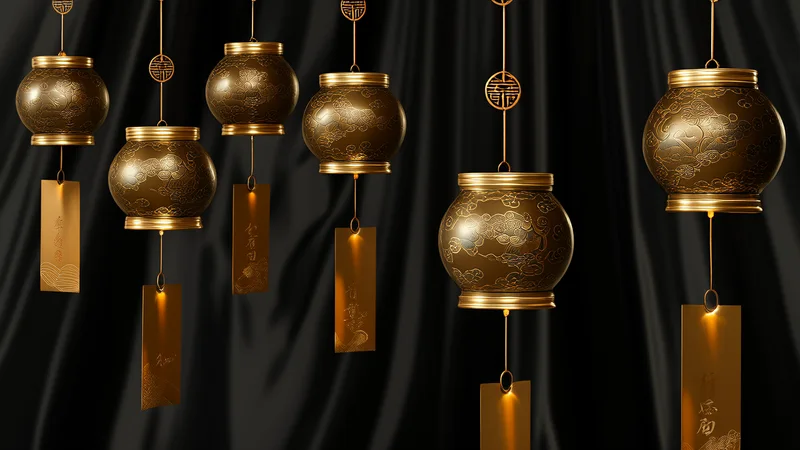
The Role of Wind Chimes in Feng Shui
For centuries, wind chimes have been far more than simple garden ornaments or pleasant acoustic decorations. In the practice of Feng Shui, wind chimes serve as a profound and versatile tool, acting both as a Metal element activator and as one of the most effective remedies for sha qi (sharp or hostile energy). When chosen and placed with intention, a wind chime can transform the energy field of your home or office, bringing clarity, protection, and a sense of serene order. This article explores the deep mechanics of wind chimes, guiding you through the essential details—from the number of rods to the interplay of hollow vs solid designs, and the crucial placement direction that determines their success.
In classical Feng Shui, everything is a symphony of the five elements: Wood, Fire, Earth, Metal, and Water. Wind chimes naturally belong to the Metal element category. Metal is associated with precision, logic, communication, and the energy of letting go—just as a blade cuts through clutter, Metal energy helps us release mental and emotional stagnation. By activating Metal, wind chimes encourage a crisp, clear, and focused atmosphere. This makes them exceptionally valuable for people seeking better decision-making, more effective communication, or a calmer mind amidst a chaotic lifestyle.
The Significance of the Number of Rods
One of the most overlooked yet critical factors in choosing a wind chime is the number of rods. In Feng Shui, numbers are not random; each carries a specific vibrational quality. Traditional metal wind chimes typically have either five, six, seven, or eight rods. A chime with six rods is considered highly auspicious for attracting helpful people, celestial blessings, and good fortune. The number six also connects to the Metal element's trigram (Ch'ien), representing heaven and leadership. Meanwhile, a seven-rod wind chime is rarely used because seven can signify the "star of betrayal" in certain schools of thought—best avoided. Five rods are neutral and often used for general energy balancing, while eight rods bring the strength of the Ba Gua and are excellent for prosperity and abundance. When you choose a wind chime, always count the rods first. Your intention sets the energy, but the number anchors it.
Hollow vs Solid: The Inner Energy
Another defining feature is whether the rods or tubes are hollow vs solid. This distinction profoundly changes how the wind chime works energetically. Hollow wind chimes—typically made of metal tubes—act like a cup that receives and holds chi. They are excellent for drawing beneficial energy into a space, especially from the outside. A hollow chime also amplifies sound resonance, creating a clearer, more lingering tone. This makes hollow designs ideal for activating a stagnant corner or inviting positive energy through an entranceway.
In contrast, solid wind chimes (often bamboo or solid metal) are more direct and piercing. Their energy is sharper and more aggressive, making them better suited for deflecting or breaking up sha qi—the harmful energy that travels in straight lines from sharp corners, poles, or road intersections. A solid chime acts as a symbolic sword, cutting through negative forces. However, because solid chimes can be too harsh for calm interiors, they are often recommended for outdoor use or for facing aggressive external structures. Understanding the hollow vs solid difference is essential; using a solid chime inside a peaceful bedroom could create excess yang energy, leading to restlessness.
"The wind chime is the dentist of Feng Shui—it cleans out the painful cavities of stagnant energy while leaving the healthy structure untouched." – An old Feng Shui master's saying
Placement Direction: The Compass of Sound
The placement direction of your wind chime can make or break its effectiveness. In Feng Shui, the west and northwest sectors are the natural home for Metal element activators. Hanging a metal wind chime in the west sector of your home or garden strengthens the energy of creativity and children (for the west) or mentorship and helpful people (for the northwest). Avoid placing metal wind chimes in the east or southeast, as these areas are governed by Wood energy; Metal cuts Wood, creating conflict and burnout. Similarly, placing a wind chime in the south (Fire) sector can melt Metal, leading to frustration and scattered thoughts.
For sha qi cure, the placement direction is rather about facing the source of harm. Identify any sharp corner, straight road, or narrow alley pointing at your front door, window, or workspace. Hang a wind chime between the source and the vulnerable area, ideally at a height where its sound can travel. The chime's movement and sound continuously disperse the hostile energy. Crucially, for outdoor sha qi, use a sturdy, weatherproof chime. For indoor sha qi (such as a staircase pointing at a living room), a small metal chime works wonders. Always hang the chime with the bottom of the lowest rod at least three inches above a person's head height to avoid it interfering with personal energy fields.
The Sound: More Than Just Noise
Feng Shui treats sound as a carrier wave for chi. The ideal wind chime sound should be pleasant, melodic, and not overly sharp or jarring. A gentle, tinkling sound lightens a heavy atmosphere, while a deep, rich tone grounds and centers. Listen to a wind chime before you buy it. Does it make you feel calm, alert, or slightly annoyed? Your body knows. The sound of a chime also works as an auditory reset—every time the wind plays your chime, it clears the air, literally and figuratively. This is why wind chimes are so effective in offices: their sound interrupts mental spirals and promotes a fresh perspective. On a deeper level, the vibration of metal helps to align your personal chi with the rhythm of the environment.
Wind Chimes as a Sha Qi Cure
Let's delve deeper into the role of wind chimes as a sha qi cure. Sha qi is the aggressive, harmful energy that flows from sharp angles, overhead beams, spiky plants, or pointed roof lines. In a home, this can manifest as repeated arguments, unexplained fatigue, or financial leaks. A wind chime, especially one with solid rods, acts as a mirror and a disperser. The movement of the rods breaks the straight line of negative energy, while the metallic resonance converts the destructive vibration into something softer. Many Feng Shui practitioners place a six-rod metal chime outside a front door facing a corner from a neighbor's house. The chime's constant motion neutralizes the attack before it enters your threshold.
For indoor sha qi, such as a diagonal wall cutting into a living area, a hollow chime is often recommended because it transforms the harsh energy into a benevolent current. You can also hang a small wind chime in a bathroom to prevent prosperity from draining away—the sound keeps wealth energy circulating rather than washing down the drain. The key is to use the chime as a conscious tool, not a decoration. Set your intention when you hang it: "I release all hostile energy and welcome clarity and peace." This intention amplifies the cure.
Indoor and Outdoor Applications
Wind chimes are remarkably adaptable for both indoor outdoor use, but each environment demands a different approach. For outdoor use, choose chimes made of aluminum, copper, or galvanized steel to withstand weather. Place them near your main entrance, along a garden path, or in a balcony corner that feels heavy. Outdoor chimes protect the perimeter and invite friendly nature spirits. However, never hang a metal chime on a tree directly over your front door—its movement could "chop" your incoming luck. Instead, position it to the side, clearly offset from the main flow.
For indoor use, smaller chimes with hollow rods are preferable, especially in bedrooms or meditation spaces. The sound should be soft and soothing, not startling. Hang an indoor chime in a hallway near a bathroom, in an office above a computer, or in a stairwell to slow down rushing energy. Avoid hanging any chime directly above a bed or a sofa, as the constant vibration can disturb your rest. A great indoor trick is to hang a brass five-rod chime in a dark, quiet corner to invite movement and life. Remember, both indoor and outdoor wind chimes need regular cleaning. Dust dulls the sound and weakens the metal's energetic purity. Wipe them monthly with a soft cloth, and for metal chimes, a little lemon oil restores their bright energy.
Practical Tips for Activation
- Choose the right metal: Real metal (aluminum, iron, brass) is non-negotiable for a true Metal element activator. Plastic or resin chimes have no Feng Shui value.
- Tune your intention: Before hanging, physically hold the chime and state your intention. This binds your chi to the chime's purpose.
- Avoid cheap or harsh sounds: A chime that clanks too loudly becomes a source of noise pollution, creating its own sha qi.
- Use in threes: For a very strong sha qi source (like a pointed mountain or large construction crane), hang three wind chimes at different heights to create a layered, dissolving field.
- Refresh seasonally: In autumn (the Metal season), take your chimes down, clean them, and rehang them to recharge the element.
The Final Resonance
Wind chimes in Feng Shui are a brilliant fusion of art, science, and spirituality. They are not just passive objects; they are active participants in the energy dance of your living space. By understanding the metal element, the number of rods, the hollow vs solid construction, the placement direction, and the quality of sound, you can turn a simple chime into a powerful sha qi cure. Whether for indoor outdoor settings, the wind chime whispers a constant reminder: energy always flows, but you have the power to guide it. Let the gentle clink of metal fill your home with harmony, and trust that the ancient winds of Feng Shui are now singing in your favor.