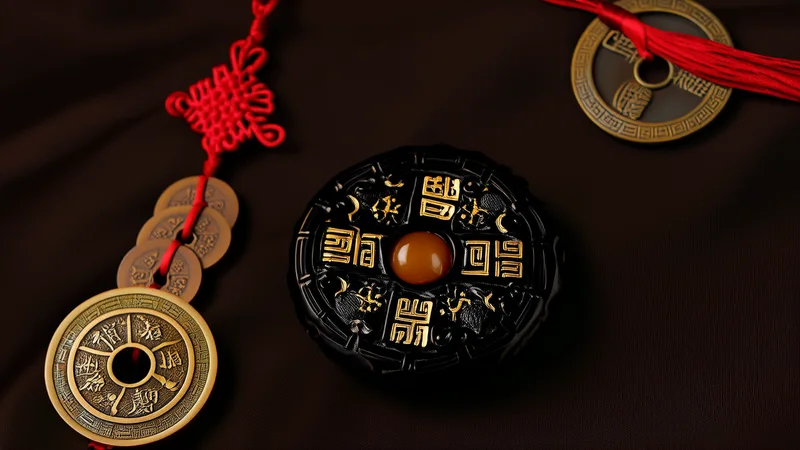
Gift-giving in Chinese culture is far more than a social formality; it is a carefully choreographed exchange of energy, respect, and symbolism. Rooted in thousands of years of Feng Shui tradition and Taoist philosophy, the gifts you choose can either strengthen relationships, bless a home with prosperity, or inadvertently bring bad luck and even sever ties. Many Western tourists and well-meaning friends have unknowingly committed serious faux pas by offering items that are steeped in taboo meanings. To help you navigate this delicate cultural landscape, we have compiled a comprehensive guide to the gifts you should never give, along with thoughtful “what to give instead” suggestions that will protect your relationships and your own good fortune.
The Clock Gift Funeral Connection: Time Running Out
Perhaps the most notorious Chinese gift taboo is the giving of clocks. In Mandarin, the act of giving a clock is “sòng zhōng” (送钟), which sounds exactly like the phrase “sòng zhōng” (送终) meaning “to attend a funeral” or “to express final farewell to the dying.” This is not a subtle phrasing; it is a direct and chilling reference to death. In Feng Shui, a clock also represents the forward march of time, and gifting one to a senior or the head of a family essentially says, “Your time is nearly up” — a profoundly disrespectful message.
Never offer a clock to a Chinese elder or business partner. It is the equivalent of wishing them to the afterlife, and many families would be genuinely offended, even if you intend the beautiful timepiece as a keepsake.
What about wristwatches? The same logic applies, though with slightly less severity. A watch is still a timekeeping device and carries the same homophonic implication of “sòng zhōng.” If you must give something related to time, consider instead a high-quality desk calendar (which represents abundance and planning) or a beautiful sunrise painting, which symbolizes new beginnings. In modern Chinese gifting culture, a quality pen or a set of writing brushes is always a safer and more auspicious choice, as writing instruments represent knowledge and career advancement.
The Knife Gift: Cutting Ties and Severing Fortune
A knife, scissors, letter opener, or any sharp cutting implement is another absolute no-no in Chinese gift etiquette. The act of giving a knife is called “sòng dāo” (送刀), and in Feng Shui symbolism, sharp objects carry “Sha qi” — hostile, piercing energy. The message is clear: you are cutting the relationship, slicing away the recipient's wealth, or inviting conflict into their home. A knife gift is often interpreted as an act of aggression or a wish for the relationship to be “cut off.”
Even a beautifully forged chef’s knife for a culinary enthusiast is frowned upon. Traditional Chinese wisdom says that using a gifted knife will forever be shadowed by the negative intention of the giver. If you have already given a knife in the past, the customary remedy is for the recipient to pay you a nominal amount — a coin or a small note — to “buy” the knife, thereby negating the implied severance.
- What to give instead: Choose items that symbolize connection and continuity. A set of chopsticks is excellent, as they represent harmony and long-lived relationships (in Chinese, chopsticks “kuài zi” also sounds like “fast birth” or “happiness”).
- Another safe alternative: A beautiful wooden serving platter or a quality teapot encourages gatherings and shared joy, in strong opposition to the divisive energy of a knife.
Umbrellas and the Pear Homophone: Separation and Dispersal
Two common gifts that seem innocent but are profoundly ill-omened are umbrellas and pears. The umbrella, “sǎn” (伞), is a direct homophone for “to scatter” or “to part” (散). Sending an umbrella to a couple or a friend sends the message that you expect them to disperse, to separate. In romantic relationships, giving an umbrella is practically a breakup note. The same logic applies in Feng Shui: an umbrella is a temporary shelter, not a stable blessing, and it encourages energy to disperse rather than collect.
The Pear Homophone: A Fruit of Forced Goodbye
Pears, “lí” (梨), are equally dangerous. The fruit’s name is a perfect homophone for separation (离) — as in “separation” or “divorce.” Giving a pear to a friend or loved one, either as a fresh fruit gift or from a fruit basket, is akin to saying “I wish for us to be apart.” This is especially true for couples. During Chinese New Year, no prudent host would place a pear on the dining table for guests. The negative symbolism is so powerful that many hospitals also avoid serving pears to patients, as they don’t want to suggest “suffering separation” from life.
If you receive pears as a gift by accident, it is customary to immediately give the giver a small coin in return, symbolically “paying” for the pear and thus frustrating the inauspicious homophone. But the best practice is simply to avoid pears entirely.
What to give instead: For fruits, choose tangerines (auspicious orange-gold, representing wealth) or pomelos (representing abundance and family unity). For shelter-related gifts, a beautiful woven basket or a storage box conveys the idea of gathering and preserving, not scattering.
Shoes: Stepping on Good Fortune and Bringing Evil
Shoes are another item on the Chinese gift taboo list, and they carry a double negative. First, the word for shoes, “xié” (鞋), sounds like “evil” (邪) — specifically crooked or wicked energy. Giving a pair of shoes can be interpreted as handing evil or bad luck to the recipient. Second, shoes are an item that you wear at ground level; in Feng Shui, they accumulate the dirt and negative energy of everywhere you walk. Gifting shoes may symbolically say, “You will walk away,” or worse, “You will trample the good chi in your home.”
In some regional Chinese traditions, shoes also represent the intimate act of stepping under a husband’s roof, but giving them to someone who is not a family member is highly inappropriate. If a pair of shoes is given without the recipient buying them for a token sum, the recipient's fortune could be “walked off.”
- What to give instead: A pair of high-quality silk socks or slippers? Not really, as those are worn on the feet as well. The best alternatives are warm and cozy scarves or shawls, which wrap the recipient in protection and warmth.
- Better yet: A beautiful belt or wallet, which symbolizes the gathering of wealth around the waist or in your pocket.
Candles and Handkerchiefs: Icons of Mourning and Tears
Both candles and handkerchiefs are deeply connected to Chinese funeral rites, making them terrible gifts for birthdays, weddings, or housewarmings. Candles — especially red ones — are used on altars for ancestor worship and in funeral ceremonies to guide the spirit. In some regions, giving a candle to a living person is interpreted as a wish for their spirit to depart. Even scented or decorative candles can be problematic because their primary association in Chinese culture is with mourning, not romance or relaxation (which is how they are viewed in the West).
The handkerchief, “shǒujuàn” (手绢) or “shǒupà” (手帕), is even more explicitly tied to grief. In Chinese funeral customs, mourners are given white handkerchiefs to wipe away their tears. To give a handkerchief as a gift is to predict sorrow for the receiver. Historically, handkerchiefs were also given as a signal of complete separation in romantic stories — a tear-soaked cloth meant a final goodbye. Furthermore, the character for handkerchief (帕) can evoke the idea of “pà” (怕), which means “to fear,” so the gift is loaded with anxiety.
Never wrap a gift in black or white cloth, and never include a handkerchief in a housewarming gift basket. The presence of a handkerchief is an omen of living in a house filled with tears.
What to give instead: Instead of candles, give a high-quality salt lamp (which is not associated with funerals and cleanses chi) or a beautiful vase (which represents peace and fertility in Feng Shui). Instead of a handkerchief, offer a soft, folded pashmina shawl or a small plant like a money tree — these convey care without the funereal baggage.
Chinese Gift Taboos: General Rules and What to Give Instead
Beyond the specific deadly items, there are broader Chinese gift taboos that every giver must respect. You should always avoid gifts in sets of four, because the word for four, “sì” (四), sounds like death, “sǐ” (死). A gift of four items is a direct invitation for death. Similarly, avoid white flowers and black wrapping paper (white and black are mourning colors). Never give a mirror, which is a medium for evil ghosts and can shatter relationships. Items that are too sharp, too cheap (insulting), or that are obviously useless are also frowned upon.
When you are in doubt, the safest and most appreciated gifts are gifts of money in a red envelope (known as “red packet” or “lai see”), a fine bottle of Chinese wine (always in pairs — two bottles symbolizes double happiness), a high-quality tea set, or luxury dried fruits like dates and longans. These are universally accepted because they carry positive homophones and symbols of abundance.
- Clock gift funeral warning: Avoid all timepieces unless you add the token payment ritual. Never give a clock to an elder.
- Knife gift warning: Avoid any sharp metal. If you must, the recipient must “buy” it with a coin.
- Umbrella warning: “San” means scattering; don’t send umbrellas to lovers or business partners.
- Pear homophone warning: “Li” means separation; don’t share or give pears to people you care about.
For the complete practical guide on Chinese gift-giving — when to bring gifts, how many, what to say when presenting them, and which occasions require gifts — see ChinaRules101’s Chinese Gift-Giving Guide, which covers the cultural logic behind every rule.