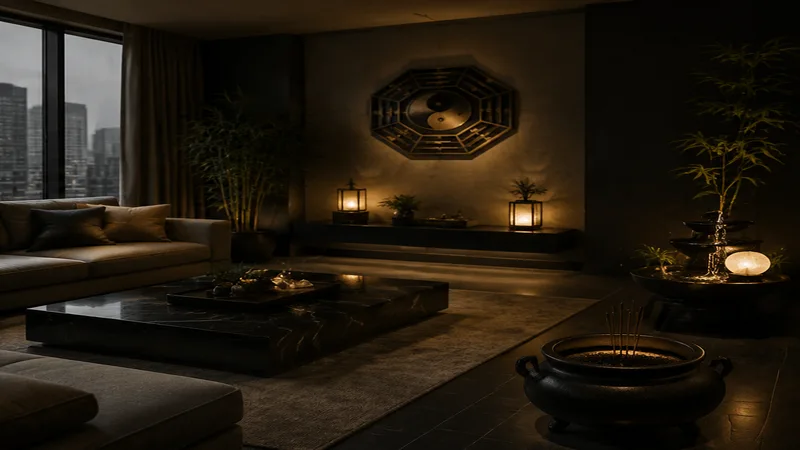
How Your Home Environment Affects Your Health: Feng Shui Perspective
Your home is more than just a roof over your head—it is a living, breathing extension of your body and mind. From the moment you wake up to the last light you turn off at night, your surroundings constantly send signals to your nervous system, hormones, and even your immune response. Modern science increasingly validates what ancient traditions have known for millennia: your environment health feng shui connection is real, measurable, and profoundly impactful. In this article, we explore through a Feng Shui lens how your home environment affects your health, and what you can do to restore harmony, vitality, and peace to every square foot of your living space.
The Invisible Web: How Your Home Speaks to Your Body
Feng Shui, which literally translates to "wind and water," is the ancient Chinese art of arranging your physical environment to support the flow of vital energy, or chi. But this is not mystical wishful thinking. When you consider that you spend roughly one-third of your life sleeping and another significant portion working, eating, and relaxing at home, it becomes clear why your dwelling acts as a secondary "organ system." A well-balanced home can lower cortisol levels, improve sleep quality, and even strengthen your immune response. Conversely, a chaotic, dark, or cluttered environment can trigger chronic stress, anxiety, and physical ailments. The core principle is simple: your home is a mirror of your internal state, and by adjusting the mirror, you can change the reflection.
Traditional Feng Shui holds that clearing and balancing your physical environment has a corresponding effect on mental clarity and emotional well-being — a principle that also finds support in modern environmental psychology research on clutter and stress.
Natural Light Health: The Ultimate Chi Booster
Among all environmental factors, natural light is perhaps the most powerful influencer of your well-being. Feng Shui practitioners have always prized sunlight as the purest form of yang energy—active, warming, and life-giving. Modern science agrees. Natural light health benefits include regulating your circadian rhythm, boosting serotonin production, and enhancing vitamin D synthesis. When your living room or bedroom is dimly lit, or windows are blocked by heavy curtains, furniture, or clutter, your body struggles to distinguish day from night. This confusion disrupts melatonin release, leading to poor sleep, mood swings, and a weakened immune system. Feng Shui advises maximizing natural light in every room, especially in the morning. Open your curtains fully by 8 a.m. Use sheer layers instead of blackout drapes during the day. Place mirrors strategically to bounce sunlight into darker corners. If you live in a north-facing apartment, consider adding full-spectrum light bulbs that mimic daylight—your body will thank you.
Air Quality: The Breath of Your Home
In Feng Shui, air is the literal vehicle of chi. When chi becomes stagnant, heavy, or polluted, it directly affects your respiratory health, mental clarity, and emotional balance. Air quality is not merely about dust and allergens; it also includes the invisible chemical emissions from paints, synthetic furniture, cleaning products, and even electronic devices. Poor air quality in the bedroom can cause headaches, fatigue, and restless nights. Feng Shui emphasizes constant, gentle ventilation as a cure. Open opposite windows for at least five minutes daily to create cross-ventilation—this is known as "sweeping the chi." Introduce living plants like snake plant, peace lily, or bamboo palm, which naturally filter toxins and add oxygen. Avoid synthetic air fresheners; instead, use natural essential oils like lavender or eucalyptus. Also, be mindful of your HVAC filters—change them regularly. In the Bagua map (the Feng Shui energy grid), the health area of your home corresponds to the center. Keep this space clean, open, and well-ventilated to support overall vitality.
Noise Pollution: The Hidden Stressor
Sound is an often-overlooked aspect of Feng Shui. Every noise in your home carries a frequency that either nourishes or depletes your nervous system. Noise pollution—from traffic outside, humming appliances, loud plumbing, or even a ticking clock in the bedroom—creates a subtle but constant background stress. Your body never fully relaxes because its threat-detection system remains on alert. Over time, this chronic auditory stress contributes to elevated blood pressure, anxiety, and digestive issues. Feng Shui recommends creating "sound oases"—areas where silence dominates. Place a water fountain in the entryway to mask city noise and introduce soothing, flowing chi. Use thick rugs, tapestries, or bookshelves on walls facing noisy neighbors to absorb sound. In your bedroom, eliminate all electronic devices, including chargers, clocks, and routers, which emit both electromagnetic and audible hums. If you cannot control outside noise, mask it with a white noise machine or a recording of gentle rain. Your sleep spindle activity—the brain waves that consolidate memory—depends on a quiet, uninterrupted environment. Protecting your ears is protecting your brain.
Clutter Stress: The Physical Manifestation of Mental Noise
Perhaps the most famous and immediate Feng Shui teaching is about clutter. Clutter stress is not just a metaphor—it is a measurable physiological response. When you see piles of unsorted mail, overstuffed closets, or a crowded kitchen counter, your visual cortex sends emergency signals to your amygdala, the brain's fear center. This triggers a mild but continuous fight-or-flight response, elevating cortisol and adrenaline. Over time, living in clutter exhausts your willpower, impairs concentration, and even increases the risk of depression. Feng Shui views clutter as "stuck chi"—energy that cannot flow because it is trapped in objects. The remedy is not aggressive decluttering (which can itself cause stress), but gradual, loving release. Start with one drawer or one shelf per day. Ask yourself: "Does this item support my health, purpose, or joy?" If not, thank it and let it go. Keep surfaces, especially in the bedroom and bathroom, as clear as possible. Use closed storage to hide visual chaos. Remember that your external environment health feng shui interactions are bidirectional—clear your space, and your mind will follow.
- Front entrance: Remove shoes, coats, and mail piles immediately. This is where chi enters your body and home.
- Bedroom: No work materials, TVs, or exercise equipment. This room is solely for sleep, intimacy, and restoration.
- Kitchen: Clean out expired food and broken appliances weekly. The stove represents your health and wealth in Feng Shui.
- Bathroom: Keep the toilet lid closed, drains unclogged, and mirrors clean. Water energy that leaks or stagnates affects your emotional health.
Biophilic Design: Reconnecting with Nature for Modern Healing
The current wellness movement has caught up with an ancient Feng Shui principle: humans are not separate from nature, and our homes should reflect that. Biophilic design involves intentionally incorporating natural elements into your built environment—not just as decoration, but as functional medicine. Feng Shui recognizes five elements: wood, fire, earth, metal, and water. When all are present in balanced proportion, chi circulates harmoniously. Biophilic design aligns beautifully with this philosophy. Add wooden furniture or floofies, stone textures, woven baskets, and ceramic vessels. Introduce natural fibers like cotton, linen, and wool for bedding and curtains. Use botanical prints or actual indoor plants to draw the outside in. Water features—whether a small tabletop fountain or an aquarium—bring the soothing element of flow. Even viewing images of nature has been shown to lower heart rate and improve focus. In a modern world dominated by concrete, glass, and electronics, biophilic design is your antidote to stress and disconnection. Your nervous system recognizes those natural cues as "safe—this place supports life."
Modern Home Health Effects: The Double-Edged Sword
We must acknowledge that today's homes are vastly different from the simple dwellings that inspired classical Feng Shui. Central heating, air conditioning, smart devices, and ubiquitous plastics have changed the energetic profile of indoor spaces. Modern home health effects include electromagnetic fields (EMFs) from Wi-Fi routers and appliances, off-gassing from synthetic materials, and the psychological pressure of constant connectivity. Feng Shui does not reject modernity; it adapts. To mitigate EMF exposure, place your router far from sleeping and seating areas, and shut it off at night. Choose low-VOC paints, solid wood furniture, and organic cotton textiles. Reduce electronic clutter—fewer screens in the bedroom and dining area. Install water filtration to improve the quality of your drinking and bathing water. Importantly, create "tech-free zones" where you can unplug and simply be. Your home should be a sanctuary that counteracts the frenetic pace of the outside world, not a replica of your office or a data center. By consciously adapting Feng Shui principles to modern life, you reap the benefits of technology without its hidden costs.
Practical Steps to Transform Your Home into a Healing Space
Now that you understand the interconnections between your home and your health, it is time to act. Here is a simple, actionable plan based on Feng Shui wisdom:
- Morning routine for light: Within 30 minutes of waking, open all curtains and blinds. If your bedroom faces north, spend 10 minutes near a bright window.
- Evening routine for air: After sunset, open two opposite windows for five minutes to let accumulated stale chi escape and fresh night air enter.
- Weekly decluttering session: Set a 20-minute timer daily. That's just 140 minutes per week—enough to transform even the most cluttered home within a month.
- Sound check: Walk through each room and listen for 30 seconds. Identify any hums, buzzes, or ticks. Fix or remove the source. Add a soft rug or candles to absorb harsh echoes.
- Biophilic touch: Purchase one new plant for your living room and one for your bedroom. Even a small succulent on your desk counts. If plants feel challenging, framed botanical art or a bamboo mat will suffice.
"Your home is your first environment. Heal it, and you heal yourself." — Modern Feng Shui adaptation
The connection between environment health feng shui and your bodily well-being is not a matter of superstition—it is a matter of survival. Humans are highly sensitive energy systems, constantly exchanging heat, chemicals, air, and electromagnetic signals with our surroundings. When your home supports natural light health, clean air, peaceful soundscapes, and a clutter-free flow of chi, your body can do what it does best: heal, rest, and thrive. Biophilic design and mindful adaptation of modern home health effects turn your residence from a passive shelter into an active partner in your wellness journey. Start with one small change today. Open a window. Move a plant closer to your desk. Clear a drawer you haven't touched in years. Your body will respond—not tomorrow, but tonight, as you sleep soundly in a space that finally feels like home.