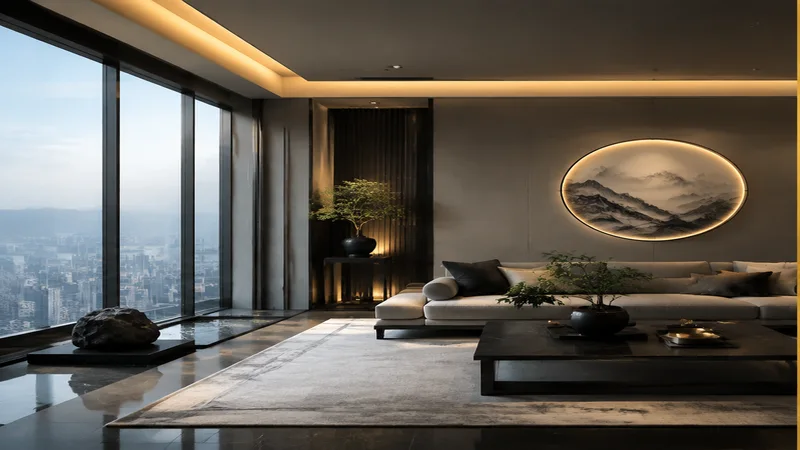
Glass Curtain Wall Buildings: Reflected Sha Qi & Modern Feng Shui
In the heart of every modern metropolis, glass curtain walls shimmer like crystalline monoliths. Feng Shui readers may describe a neighboring façade that throws harsh sunlight or artificial glare into a room as reflected sha qi—a contemporary image of visual disturbance. In practical terms, the same scene can involve glare, heat, privacy loss, or screen reflections. This guide keeps both layers: the poetic language of qi and the ordinary fixes that make a room comfortable.
Feng Shui is the ancient art of harmonizing humans with their environment. Traditionally, practitioners warned of "poison arrows"—straight roads, sharp corners, or angular rooftops aimed at your front door. Today, the poison arrow has evolved. It is no longer a physical beam or a pointed wall; it is a concentrated beam of light bouncing off a glass building, striking your desk, your bed, or your living room without warning. This article explores the phenomenon of reflected sha qi from glass curtain walls, offers clear diagnostics for affected spaces, and provides genuine, time-tested remedies for reclaiming energetic equilibrium in the modern urban landscape.
What Exactly Is Reflected Sha Qi?
Sha qi, also known as killing energy, is the opposite of sheng qi (life-giving energy). In classical Feng Shui, sha qi is harsh, aggressive, and destabilizing. It arrives suddenly and moves in straight lines, creating discomfort, conflict, and even health issues over time. When we discuss reflected light, we are talking about a secondary form of sha qi. The glass façade of a modern building does not generate energy itself—it borrows from the sun, from streetlights, and from other structures. However, its concave or convex curves, its angled panels, and its highly polished surfaces can focus and amplify that borrowed light into intense, laser-like beams.
Imagine a magnifying glass focusing sunlight onto a leaf; the leaf begins to smolder. A glass curtain wall does the same on a macro scale. It accumulates the ambient light of the sky, then throws it back at a specific angle, often bright enough to cause visual discomfort or temporary blindness. This is the essence of reflected sha qi. It is not merely an inconvenience; it is an energetic intrusion that disrupts the natural flow of chi. According to Feng Shui principles, prolonged exposure to such sharp, sudden light can lead to irritability, poor concentration, headaches, and a persistent sense of being "watched" or "attacked" by the environment.
The Poison Arrow of the Glass Age
In traditional Feng Shui, a poison arrow is a straight line or sharp object that points at your home. In the glass age, the poison arrow has a new form: a concentrated reflection from a neighboring glass tower. This reflection can strike your building at specific times of the day, depending on the angle of the sun and the orientation of the offending structure. Have you ever noticed a blinding flash of light that hits your office window every morning between 9 and 10 AM? That is a modern poison arrow.
The danger of this reflected light goes beyond mere glare. Feng Shui teaches that light carries information. Natural sunlight is living, nourishing qi. Reflected, distorted, and multiplied light is fragmented qi. It loses its life-giving properties and instead becomes chaotic, jarring, and sharp. When this light enters your windows, it does not simply illuminate your space—it injects it with aggressive energy. Over time, this can affect decision-making, emotional resilience, and even the quality of relationships within the space. Occupants may find themselves easily startled, prone to conflict, or inexplicably fatigued, not because of workload, but because their environment is subtly attacking them at an energetic frequency.
Moreover, the reflection from a glass building is often unpredictable. It moves through the day, shifts with the seasons, and may even intensify in winter when the sun sits lower on the horizon. This unpredictability creates a sense of instability, which Feng Shui identifies as the hallmark of disruptive sha qi. Traditional remedies like wind chimes or bagua mirrors were designed for static poison arrows—a fixed corner, a straight road. But a reflected beam that changes every hour demands a more dynamic and mindful response.
Light Pollution: The Invisible Drain on Your Qi
Beyond the obvious glare, light pollution is a pervasive and often overlooked component of modern Feng Shui. Glass curtain wall buildings contribute significantly to light pollution by reflecting artificial light up into the sky and into neighboring residential and office windows. For urban dwellers, this means that the natural rhythm of day and night is continually disrupted. Your bedroom may be bathed in a pale, eerie glow from a distant tower even at midnight. Your office may retain a harsh, colorless brightness long after the sun has set.
From a Feng Shui perspective, light pollution distorts the yin-yang balance. Night should be yin—dark, quiet, restorative. Excessive reflected light at night forces your space into a perpetual yang state, making it difficult to relax or sleep. This is particularly problematic in modern office environments, where workers already face high stress and prolonged screen time. A modern office flanked by glass towers can feel like an aquarium—exposed, bright, and unrelenting. The qi becomes restless, and employees may exhibit signs of burnout, anxiety, or a chronic inability to "switch off" even after leaving work.
Light pollution also affects the subtle energetic boundaries of your home. In Feng Shui, windows are the eyes of a building. They allow qi to enter and exit. When those eyes are constantly bombarded with reflected light, the building loses its ability to filter and moderate energy. Instead, it becomes a passive receiver of environmental chaos. For those who live or work in high-rise districts, the only solution is not to move away, but to actively harmonize the space with intentional remedies and mindful design.
Practical Feng Shui Strategies for the Modern Office
If you spend your days in a modern office facing a glass curtain wall building, there are several genuine and practical steps you can take to mitigate the effects of reflected sha qi. These are not superstitious gestures; they are actionable adjustments that restore energetic equilibrium.
- Use sheer, light-diffusing curtains or frosted window film. Unlike heavy blinds that block all light, sheer fabrics soften the harsh reflection while still allowing natural ventilation and a connection to the outside. Frosted films create a textured surface that breaks up the laser-like focus of reflected light, transforming poison arrow into gentle ambient glow.
- Place a crystal or a small mirror on your desk, but position it carefully. In Feng Shui, mirrors reflect energy away, but a poorly placed mirror can amplify sha qi. Place a small round mirror so that it reflects the offending beam back toward the source, never at yourself or your colleagues. A crystal (such as citrine or clear quartz) placed near your workspace can diffuse and cleanse the qi, acting as a tiny energetic buffer.
- Introduce live plants with broad, round leaves. Plants are powerful Feng Shui healers. A jade plant, peace lily, or rubber tree placed between you and the window acts as a physical and energetic shield. The soft, rounded edges of the leaves absorb and soften the sharpness of reflected light. Avoid spiky plants like cacti, which only add more sha qi.
- Create a personal "yang anchor" near your work area. Because reflected sha qi is an excess of harsh yang, you need a stabilizing yin presence. Add a small table fountain, a piece of dark-colored sea salt, or a bowl of black pebbles to your desk. These grounding elements remind your environment of the slower, deeper rhythms of earth energy.
- Wear or keep natural stones such as obsidian or smoky quartz on your person. These stones are known in Feng Shui for their protective qualities, as they absorb negative frequencies and neutralize them. They are especially helpful when the reflected light changes unpredictably throughout the day, providing a constant energetic shield.
It is also vital to be aware of your own posture. When a beam of reflected light strikes you, do not sit directly in its path for hours. Shift your desk slightly, or angle your chair so that your body is not in the line of fire. Even a 15-degree rotation can significantly reduce the energetic impact. And if the glare is truly unbearable, consider speaking with building management about anti-reflective coatings on your windows—this is a modern, environmentally friendly remedy that aligns perfectly with Feng Shui's emphasis on harmonious adjustment rather than confrontation.
Remedies for Neighboring Glass Towers
For homeowners and tenants living across from a neighboring glass tower, the sense of being constantly illuminated can feel invasive. But Feng Shui offers multiple layers of protection. The first line of defense is your own window treatment. Heavy curtains or blackout shades are essential for bedrooms, especially facing the western or southern sun, which produces the most intense reflections. During the day, use them selectively. At night, close them completely to restore the yin sanctuary of your home.
Another powerful remedy is the use of a traditional bagua mirror, but with extreme caution. A small concave bagua mirror placed on the inside of your window, facing the offending tower, can symbolize absorbing and neutralizing the reflected light. However, do not place any mirror outside your window or directly facing another person's living quarters—this creates intentional conflict and is considered unethical Feng Shui. The goal is to protect, not to attack.
You can also create a "buffer zone" of energy inside your home. Hang a wind chime near the affected window—metal, not bamboo, because metal element can cut through sha qi. The gentle, musical clangs diffuse the sharpness of external energies. Additionally, place a dense, rounded object like a large stone, a globe, or a heavy pottery vase on the windowsill. This symbolizes "mountain" energy, which in Feng Shui is the ultimate stabilizer. A mountain does not move, does not react, but steadfastly absorbs the arrows of the sky.
"The best Feng Shui is not to fight the environment, but to listen to its rhythm and dance with its flow. A glass tower is neither good nor evil—it is a mirror of our own modern ambition. When it reflects too harshly, we must soften our own inner space, not curse the glass." — A Feng Shui master's advice for urban dwellers.
Finally, consider the energetic hygiene of your entire building. If you are in a management or planning role, encourage the incorporation of green roofs or textured facade cladding that reduces reflectivity. Some cities have already introduced standards limiting glare from new glass structures. Feng Shui, at its core, advocates for harmony between all elements. By designing our built environment with mindful intentionally, we reduce the production of reflected sha qi at its source, benefiting everyone.
In conclusion, glass curtain wall buildings are the architectural language of our time. They are not inherently malevolent, but their surfaces create a unique set of energetic challenges. Reflected light, poison arrows, and light pollution are real phenomena that impact our well-being, both physically and energetically. The good news is that Feng Shui, with its ancient wisdom, provides us with a flexible toolkit of remedies—some physical, some psychological, some symbolic—to reclaim our peace.
Whether you are working in a cubicle beneath a blinding reflection or relaxing at home with a neighboring glass tower casting its pale glow upon your sofa, remember that your environment is a partner, not a dictator. By applying the principles outlined above, you can transform the harshness of reflected sha qi into a manageable, even neutral, presence. The glass may shine, but your inner sanctuary can remain unshaken.