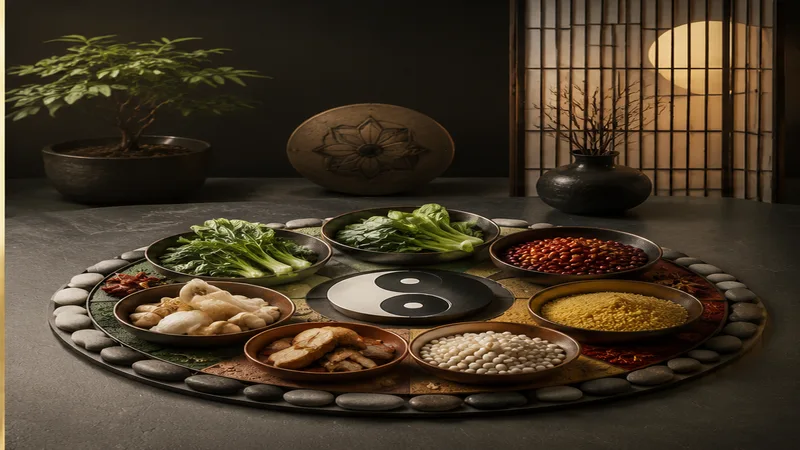
Five Elements & Food: Traditional Chinese Ideas About Nutrition
In Traditional Chinese Medicine (TCM), food is described through taste, temperature, season, and symbolic relationships. The Five Elements (Wu Xing)—Wood, Fire, Earth, Metal, and Water—offer a cultural framework for talking about balance and nourishment. This article explains those traditions without presenting them as a medical diet: everyday nutrition should follow evidence-based guidance, personal needs, and qualified clinical advice.
Unlike modern dietetics, which measures calories, macronutrients, and vitamins, TCM diet language focuses on perceived qualities such as warmth, taste, season, and movement. Each element is traditionally linked with organs and emotions, but those links are not diagnoses or treatment plans. We can still explore how the correspondences give meals a sense of season and intention while keeping practical nutrition in view.
The Wood Element: Sour Wood Liver
The Wood element embodies growth, flexibility, and upward movement. It is associated with spring, the color green, and the emotion of anger and kindness. In the body, Wood governs the liver and the gallbladder. The liver is responsible for the smooth flow of Qi throughout the body, storing blood, and regulating emotions. When Wood is in balance, you feel decisive, creative, and patient. When out of balance, you may experience frustration, irritability, or stagnation.
The taste that nourishes Wood is sour. Sour wood liver is a key concept in TCM diet: sour foods contract, astringe, and help gather energy. They stimulate the liver's function of cleansing and detoxification while also encouraging bile production. A moderate amount of sour can gently move stagnant Qi. However, excessive sour can overwork the liver, leading to tendon tightness or emotional volatility.
Foods that support the Wood element include:
- Lemon and lime (fresh squeezed into warm water in the morning)
- Vinegar, especially apple cider or rice vinegar
- Pickled vegetables (sauerkraut, kimchi—in small amounts)
- Green leafy vegetables (spinach, collard greens, chard)
- Wheat and rye, which are grains of Wood
- Sour fruits like grapefruit, green apple, and plum
Balance is not sameness; each taste, each element, is a teacher. The liver thrives on gentle movement—sour is the nudge that helps Qi flow freely, not the storm that uproots it.
To apply this, start your day with warm lemon water. During spring, increase your intake of fresh greens and slightly sour dressings. Avoid excessive alcohol and greasy foods, which blunt the liver’s ability to move Qi. The goal is to support, not overwhelm, the liver’s natural detoxification rhythms.
The Fire Element: Bitter Fire Heart
Fire is the element of summer, of warmth, joy, and connection. It governs the heart and small intestine, and it houses the mind or Shen. The fire element is tied to our ability to give and receive love, to feel enthusiasm, and to sleep peacefully. When Fire is balanced, the heart is calm, the mind is clear, and circulation is strong. When imbalanced, you might feel anxiety, restlessness, insomnia, or a racing heart.
The taste associated with Fire is bitter. Bitter fire heart is a core principle in TCM diet: bitter foods cool, dry, and lower heat. They help the heart to cool down from emotional and physical excess. Bitter flavors also guide Qi downward, which can relieve conditions like acid reflux or agitation. In a culture obsessed with sweet, bitter is often avoided—but TCM diet insists that a little bitterness is essential for a healthy heart and clear mind.
Foods that feed the Fire element include:
- Dark leafy greens like kale and dandelion greens (bitter and cooling)
- Bitter melon and arugula
- Coffee and dark chocolate (in small amounts)
- Cranberries, grapefruit peel, and celery seed
- Lotus seed, which calms the heart and promotes sleep
- Hibiscus tea and chrysanthemum tea
That which is bitter to the tongue is often sweet to the heart. In cooling the heart, we make space for joy; in drying excess, we clear the fog of the mind.
If you struggle with anxiety or feeling overheated—whether from stress, spicy food, or hot summer weather—introduce mild bitter foods into your meals. A simple salad with arugula, a cup of dandelion root tea, or a square of dark chocolate after dinner can make a difference. Avoid excessive caffeine and spicy foods, which can stir the Fire into irritation.
The Earth Element: Sweet Earth Spleen
Earth is the element of late summer, of harvest, nurturing, and grounding. It governs the spleen and stomach, which in TCM are the central engines of digestion. The spleen transforms food into Qi and blood. When Earth is balanced, you have strong appetite, stable energy, and a grounded, calm demeanor. When imbalanced, you may feel worried, tired, bloated, or have poor digestion.
The taste that nourishes Earth is sweet—not the refined sugar of candy, but the naturally sweet, complex flavors of whole foods. Sweet earth spleen means the spleen loves sweet, gentle, and harmonizing foods. This sweetness builds Qi and moistens the body. However, too much sweet—especially in the form of white sugar, syrups, or processed carbs—can create dampness, leading to phlegm, heaviness, and sluggishness.
Foods that support the Earth element include:
- Sweet potatoes, yams, and winter squash
- Cooked root vegetables (carrots, parsnips, beets)
- Whole grains like millet, oats, and brown rice
- Legumes such as lentils and adzuki beans
- Honey (raw, in moderation) and dates
- Warming soups and stews that are easy to digest
The spleen is the furnace of the body. Feed it with warm and sweet simplicity—not with cold, raw, and chaotic sugar—and the fire of your Qi will burn steadily.
For TCM diet, the Earth element is foundational. Eat at regular times, chew thoroughly, and prioritize cooked foods over raw, especially if you tend to feel cold or tired. A bowl of sweet potato soup or a millet porridge with dates is a classic spleen tonic. Avoid iced drinks and heavy dairy, which burden the spleen’s transforming capacities.
The Metal Element: Pungent Metal Lung
Metal is the element of autumn, of letting go, precision, and breath. It governs the lungs and the large intestine. The lungs control the skin and the body’s protective Qi (Wei Qi), which defends against colds and illness. Metal is associated with grief, but also with clear boundaries and inspiration. When Metal is balanced, breathing is deep, the skin is radiant, and the immune system is strong. When imbalanced, you may experience dull skin, frequent colds, sadness, or shallow breathing.
The taste linked to Metal is pungent (also called acrid or spicy). Pungent metal lung describes how pungent foods spread and move Qi outward to the surface, helping your body sweat, open the pores, and release pathogens. Pungent flavors also help break up phlegm and stimulate the lungs to clear congestion. Think of onions, garlic, ginger, and mustard—these are classic lung-supporting foods.
Foods that strengthen the Metal element include:
- Ginger, garlic, and onions
- Mustard greens, radishes, and horseradish
- Peppermint and spearmint
- Cinnamon, cloves, and fennel seeds
- Basil, thyme, and rosemary
- White or lightly colored foods (pears, mushrooms, bamboo shoots), as white belongs to Metal
Pungent is the breath that moves stagnation. The lungs, like autumn leaves, need to release what no longer serves—pungent foods aid that noble letting go.
In autumn, or when the seasons change, increase pungent foods to protect your Lung Qi. A warm soup with ginger, garlic, and scallions is a perfect remedy for a minor cold. However, be careful: excessive pungency can deplete your Qi, especially if you sweat heavily or feel weak. Balance is again the key.
The Water Element: Salty Water Kidney
Water is the element of winter, of stillness, depth, and survival. It governs the kidneys and bladder. In TCM, the kidneys are the root of vital essence (Jing), which is your inherited constitution and reserve of life force. The kidneys also control water metabolism, bone health, and hearing. When Water is balanced, you feel calm, resilient, and free from fear. When imbalanced, you may experience lower back pain, knee weakness, dizziness, or chronic fear and anxiety.
The taste associated with Water is salty. In TCM diet language, a small salty taste is said to guide energy downward and inward. That is a traditional correspondence, not a kidney treatment. Modern dietary guidance still matters: excessive sodium, especially from processed foods, can contribute to health risks, so follow clinician or public-health advice for your circumstances.
Foods that nurture the Water element include:
- Seaweeds (kelp, wakame, nori) which provide natural, mineral-rich salt
- Miso and soy sauce (in moderation, as fermented salts)
- Beans, especially black beans and kidney beans
- Bone broth or fish broth (rich in minerals)
- Dark-colored foods like black sesame seeds, black mushrooms, and black rice
- High-quality sea salt or Himalayan salt added at the end of cooking
The kidney is the ocean of your vitality. A gentle salt—not the harsh salt of craving—anchors your spirit to the bone, reminding you that depth and stillness are also nourishing.
During winter, favor hearty, slow-cooked meals with a touch of saltiness—like a bone broth with black beans and seaweed. Salty is a flavor that is easy to overdo, so taste consciously and choose unrefined salts. Also, stay hydrated with warm liquids, as the kidneys love moisture that is not cold or icy.
Bringing It All Together: Seasonal Eating and TCM Diet
The wisdom of the five elements food practice is inseparable from seasonal eating. In TCM, each season is governed by one element, and your diet should shift accordingly to support the organ that is most active. Spring calls for more sour and green foods to help the liver; summer welcomes bitter and cooling foods to soothe the heart; late summer favors sweet and yellow foods to nourish the spleen; autumn leans on pungent and white foods to protect the lungs; and winter asks for salty and black foods to fortify the kidneys.
This cyclical approach to eating is not rigid. It is a song—each taste takes its turn, never dominating, ever harmonizing. A typical day might include a lemon water (sour) upon waking, a warm millet porridge with dates (sweet) for breakfast, a small handful of bitter greens at lunch, ginger in your stir-fry (pungent), and a pinch of sea salt in your evening soup (salty).