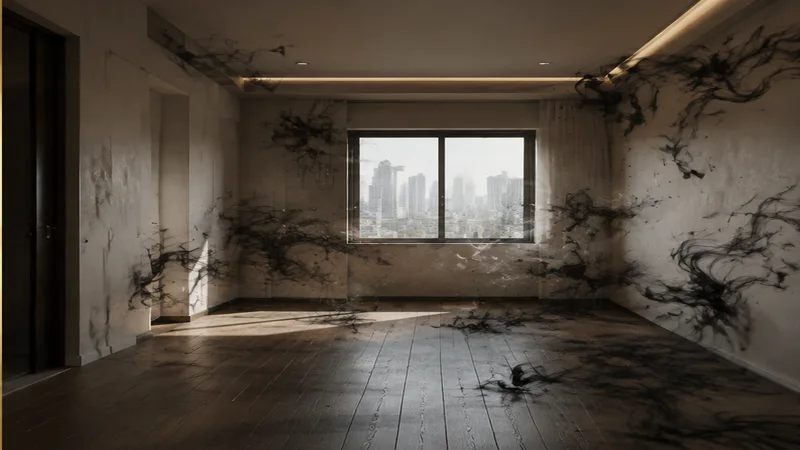
Why Empty Rooms Hold More Than Dust
After Chinese New Year, travel and closed windows can leave a room feeling still, dusty, or unfamiliar. In Feng Shui language, an unused room collects stagnant energy and chaotic qi; in everyday language, it may simply need fresh air, light, cleaning, and human activity. The days after the New Year offer a meaningful ritual for reopening the space and welcoming the household back.
Understanding Empty Room Feng Shui
The principle of empty room feng shui is rooted in the idea that chi (or qi) needs to move, flow, and transform. When a room is furnished but unused, the energy still circulates—but without human presence, activity, or intention, it becomes directionless. Worse, when a room is literally empty—no furniture, no objects, no life—the energy rushes in and immediately stagnates, creating a vortex of heaviness. This is why a vacant spare bedroom, a storage area packed with forgotten boxes, or even a hallway you rarely walk through can feel draining.
After Chinese New Year, this issue becomes especially pronounced. Many families leave their homes for days to visit relatives or take a holiday. During that time, no one enters certain rooms, windows remain shut, and the air becomes still. When you return home for the new year, you may sense that something is “off.” Doors may feel heavier, corners appear darker, and the atmosphere feels thick. This is not just jet lag—it is the result of days of accumulated stagnant energy.
The Problem with “Unseen” Space
In Feng Shui, every corner of your home influences your wellbeing, even the ones you ignore. A closed room that is rarely opened or cleaned becomes a breeding ground for chaotic qi. It can manifest as irritability, restless sleep, or a vague sense of unease. The longer the energy remains stagnant, the harder it becomes to shift. That’s why the period immediately after the New Year is critical. The intention you set now—through cleaning, opening windows, and reintroducing life to those quiet spaces—sets the tone for the entire year ahead.
“Chi abhors a vacuum. When you leave a space empty of life and movement, the energy that fills it will not be peaceful—it will become disorganized, chaotic, and heavy. Restore movement, and you restore harmony.”
How to Restore Balance After the Holiday
The good news is that clearing chaotic qi from empty rooms is straightforward if you follow a few simple Feng Shui principles. You don’t need to repaint or redecorate. You simply need to reintroduce the elements of life, freshness, and intentionality. Here is a step-by-step guide to resetting your home after the Chinese New Year break.
Step 1: Air Out Every Room – Open Windows Wide
The most immediate and powerful remedy for stagnant energy is fresh air. When you air out room after a period of closure, you physically remove the stale air that holds old, chaotic qi. In Feng Shui, opening windows is considered the most direct method of inviting new energy to enter and old energy to exit. Ideally, do this early in the morning when the air is crisp and the sun is rising. Open every window you can—not just a crack, but fully, for at least 15 to 30 minutes.
If you have a room that is truly empty, this step is even more important. The open windows allow the room to “breathe”. As the wind moves through, it sweeps away the heaviness and replaces it with what Feng Shui calls “living qi”. If possible, open windows in at least two opposite sides of the house to create cross-ventilation. This creates a natural flow that clears every corridor and corner. You can enhance the effect by ringing a small bell or clapping your hands in each empty room as you leave it, which breaks up dense energy with sound waves.
Step 2: Declutter After CNY – Clear Physical and Energetic Blockage
After the New Year, many homes are filled with leftover gifts, empty red packets, festive decorations, and packaging. But the most problematic clutter often lies in the rooms we didn’t use during the holiday. Boxes that were shoved in the spare room, old clothes that didn’t make it into the wardrobe, and miscellaneous items that have no designated home—these are all physical manifestations of chaotic qi.
To declutter after CNY effectively, you must be thorough. Take everything out of the empty or unused room. Sort it into three piles: keep, discard, and relocate. Be honest with yourself. If you haven’t used something in over a year, it is likely just collecting stagnant energy. Remove it from your home. For items you keep, find a specific place for them in a room that is actively used. A room that remains empty and cluttered at the same time is a double problem.
- Clear the floors first – energy travels along the floor. Any box, pile, or object blocking the path disrupts the natural flow.
- Wipe down all surfaces with a natural cleanser, such as salt water or a diluted vinegar solution, to neutralize residual negative energy.
- Pay special attention to corners. These are natural gathering spots for stagnant qi. Move furniture or objects away from corners, or place a small plant or crystal near them to energize the area.
- After decluttering, sweep or vacuum the room in a clockwise direction, starting from the center and moving outward. This mimics the movement of chi and helps it circulate.
Step 3: Bring in Living Energy – Plants for Healing
Once the room is clean and aired, it is time to reintroduce life. The most effective way to do this is with plants. Living plants bring the wood element into a space, which is the element of growth, vitality, and upward movement. In Feng Shui, wood energy is the antidote to stagnant, heavy, or chaotic qi. Even one healthy plant in an otherwise empty room can completely change the energetic quality of that space.
Choose hardy, low-maintenance plants like snake plant, pothos, peace lily, or bamboo. These plants thrive in indirect light and do not require constant attention, making them ideal for rooms that may not be used every day. Place them in the east or southeast corner of the room to enhance health and prosperity energy. Avoid plants with thorns or spiky leaves, as they create aggressive energy. Also, make sure the plant is alive and healthy—a dying plant is worse than no plant at all because it attracts decay and stagnation.
If you prefer not to use live plants, you can introduce the wood element through wooden furniture, a bamboo mat, or even a simple bowl of fresh fruit. The idea is to add something that is alive, growing, or naturally nourishing to the space. This counters the emptiness that allowed chaotic qi to gather in the first place.
Step 4: Additional Chaotic Qi Remedies
Sometimes, even after airing, cleaning, and adding plants, a room may still feel heavy, especially if it has been neglected for a long time. In that case, you can use specific chaotic qi remedy techniques to reset the energy field. These are simple, effective practices drawn from classical Feng Shui and Chinese folk traditions.
- Sound clearing – Use singing bowls, bells, or even a wooden wind chime. Walk around the room, allowing the sound to reach all corners. The vibration breaks up dense energy and re-establishes a gentle, healthy resonance.
- Light clearing – Light a candle or incense in the center of the room. In Feng Shui, fire transforms energy. As the flame burns, it burns away the old. Make sure the candles are unscented or use natural sandalwood or sage incense. Do not leave them unattended.
- Salt bowls – Place small bowls of coarse sea salt in the corners of the empty room for 24 hours. Salt absorbs negative energy. Afterward, discard the salt (do not reuse it) and rinse the bowls with water.
- Mirror placement – If the room remains unused for long periods, place a small mirror high on the wall, angled slightly downward. Mirrors activate the space and prevent energy from becoming stagnant. This is especially useful for corners that cannot hold a plant.
- Fresh flowers – As a temporary remedy, place fresh flowers in the room. They bring the joy of the wood element and remind the family that the room is alive. Change them every few days to keep the energy fresh.
Make the Practice a Ritual
Restoring balance after Chinese New Year should not be a rushed chore. It is a meaningful ritual that honors your home and your family’s wellbeing. As you open windows and move through each room, say a simple intention, such as “Out with the old, in with the new.” This conscious act transforms ordinary cleaning into energetic clearing. Invite your family to participate—young children can help by opening curtains, while older members can focus on heavier tasks. The shared effort strengthens the family bond and fills each room with positive, cooperative energy.
Remember, the goal is not to make every room perfect or fully furnished. It is to ensure that no space in your home becomes a trap for chaos. A well-tended empty room can actually serve as a source of calm and clarity. By spending just a few hours to air out your home, declutter, and introduce plants, you align your living space with the fresh start that Chinese New Year promises. Do this now, and the energy in your home will remain balanced, vibrant, and supportive for the months to come.
A Final Note on Returning Home
The moment you step back into your home after a trip is a powerful energetic threshold. Many traditions recommend not carrying luggage straight through the house, but leaving it at the door and walking through each room in a clockwise direction first. This acknowledges that the empty rooms have been waiting and allows the energy to reset before you unload physical belongings. When you combine this practice with open windows, a tidy space, and a few living plants, you transform your home into the sanctuary it is meant to be—a place where empty room feng shui no longer means forgotten space, but sacred space. The chaotic qi that may have gathered during the holidays will dissolve, making room for your family’s brightest intentions in the year ahead.