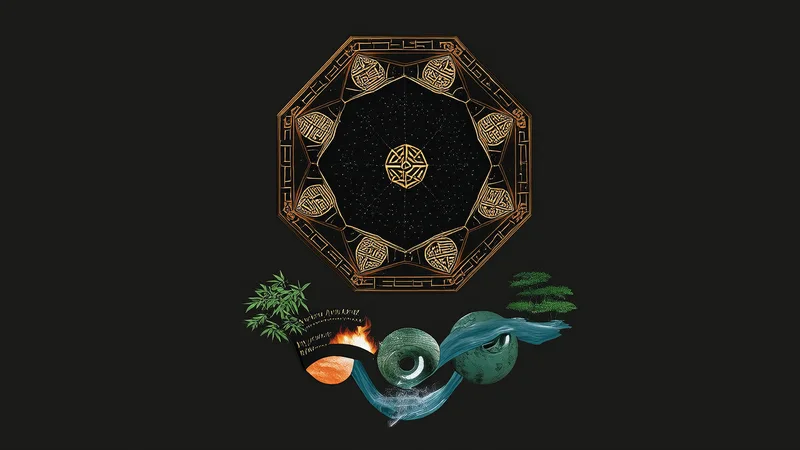
The Nine Star System (Jiu Xing) in Feng Shui: A Complete Introduction
Feng Shui offers many sophisticated tools for harmonizing your environment, but few are as elegant and deeply symbolic as the Nine Star System (Jiu Xing). This ancient Chinese astrological and geomantic method maps the interaction of time, direction, and personal energy through nine archetypal stars. Whether you are a seasoned practitioner or a curious beginner, understanding the nine stars can transform how you read your home, your year, and even your own tendencies. In this complete introduction, we will explore the meaning of each star, how the purple white flying stars move through the nine palaces, and how your personal life star reveals your core character.
What Are the Nine Stars in Feng Shui?
The Nine Star System is rooted in the Lo Shu square, a magical grid of nine positions that appears in Chinese metaphysics. Each position corresponds to one of the nine stars, each with its own element, direction, color, and symbolic meaning. The system is also known as Jiu Xing, which literally translates as "nine stars" or "nine energies." These stars are not astronomical bodies but rather vibrational energies that shift through the nine palaces of a space—the central palace plus the eight surrounding compass sectors.
In classical Feng Shui, the nine stars are considered the "breath of heaven" manifesting on earth. By knowing which star occupies each palace at a given time, you can align your activities, renovations, and daily movements with favorable or cautionary energies.
The most common application is through the annual stars and monthly stars. Each year, a different star flies into the center of the Lo Shu square, and all other stars shift accordingly. Similarly, each month brings a new central star. Tracking these movements allows you to see where auspicious or challenging energy resides in your home for that period. For example, if the prosperous #8 star lands in your front door sector for the year, that is an excellent time to activate that area with activity and bright light.
The Meaning of Each Star (1–9)
To use the Nine Star System effectively, you must first understand the character of each star. Below is a concise breakdown of the 1-9 stars meaning in both personal and environmental contexts.
- Star 1 – Tan Lang Star (Greedy Wolf) – This is the star of new beginnings, intelligence, and creativity. Its element is Water. In the personal chart, the Tan Lang star indicates a charismatic, curious, and adaptable person. In the environment, it brings opportunities in education, writing, and romance, especially when active in the north.
- Star 2 – Ju Men Star (Giant Gate) – Earth element, associated with nurturing, stability, and also illness if unbalanced. For individuals, this star suggests a supportive, practical nature with a tendency to worry. In the home, a strong star 2 can promote family care but may also invite sluggishness. It is not a favorite among the purple white flying stars for annual placement, as it can bring health setbacks when in a bad palace.
- Star 3 – Lu Cun Star (Rank and Salary) – Wood element, representing growth, ambition, and sometimes aggression. People with this star are energetic and competitive. In a room, star 3 encourages progress and wealth-building, but if aggravated, it triggers arguments and legal disputes.
- Star 4 – Wen Qu Star (Repeated Song) – Also Wood element, this is the star of academics, literature, and romance. It is highly favorable for students and those in creative fields. A person with star 4 is articulate and charming. Environmentally, star 4 enhances a study or child's bedroom, especially in the southeast or southwest.
- Star 5 – Lian Zhen Star (Integrity) – Earth element, known as the "Emperor of the Five Ghosts." This is the most challenging star because it concentrates misfortune when it occupies a palace. In personal terms, star 5 indicates a powerful, resolute character, but one who may face extreme tests. In flying star Feng Shui, you never activate the annual star 5 – instead, you keep it quiet and avoid major renovations in that sector.
- Star 6 – Wu Qu Star (Military Star) – Metal element, symbolizing authority, leadership, and discipline. This star benefits those in management, politics, or military roles. If it is your life star, you are likely decisive and protective. In the home, star 6 can strengthen the patriarch's area (northwest) and bring influence and status.
- Star 7 – Po Jun Star (Broken Army) – Metal element, and the star of communication, eloquence, and also conflict. It is a double-edged sword: favorable for negotiations and public speaking, but unfavorable for family harmony if activated. People with star 7 are sharp-tongued and resourceful. In the annual stars, a strong star 7 can mean robbery or betrayal, so keep metals calm in that sector.
- Star 8 – Zuo Fu Star (Left Assistant) – Earth element, this is the current "king star" of the modern period (Period 8, 2004–2023). It brings great wealth, prosperity, and happiness. A person with star 8 is sincere, steady, and fortunate. Among all nine stars, #8 is the most desired in the nine palaces for a year or month, especially in your financial or front-door position.
- Star 9 – You Bi Star (Right Assistant) – Fire element, representing brightness, fame, and recognition. This star accelerates visibility, celebration, and enlightenment. In personal terms, star 9 people are warm, inspiring, and sometimes impatient. When star 9 appears in the annual flying stars, it is a wonderful opportunity for marketing, weddings, or launching new ventures, provided it is not in the center (which can bring burnout).
Your Personal Life Star in the Nine Star System
Beyond yearly and monthly shifts, the Nine Star System offers a deeply personal tool: your life star. This is determined by your birth year (using the Chinese solar calendar). Each person belongs to one of the nine stars, similar to how Western astrology assigns zodiac signs. Your life star reveals innate strengths, challenges, and compatibility with other people and spaces. For example, a Star 1 person embodies the flow of water – intelligent, introspective, and intuitive. A Star 8 person thrives on earth-based stability and long-term wealth-building.
To find your life star, you can use a traditional formula based on your gender and birth year. For men, add the last two digits of your birth year, subtract from 10, and reduce to a single digit. For women, add the last two digits, add 5, and reduce. The result maps to a star. Once you know your star, you can begin to harmonize your environment. If you are a Star 2 (earth), spending time in the southwest (earth direction) may strengthen you. If you are a Star 6 (metal), the northwest is your power spot.
The Purple White Flying Stars and the Nine Palaces
The purple white flying stars is a specific term used for the nine energies when they are applied as "fei xing" (flying stars). The name comes from the colors assigned to each star: 1 is white, 2 is black, 3 is green, 4 is green, 5 is yellow, 6 is white, 7 is red, 8 is white, 9 is purple. Among these, the "purple" star (9) and the "white" stars (1, 6, 8) are traditionally considered auspicious, hence the name. This practice is one of the most widely used branches of "San Yuan" Feng Shui, focusing on time and change.
The nine palaces are the nine sectors of a floor plan when overlaid with the Lo Shu grid. Each palace has a fixed direction: North, Northeast, East, Southeast, South, Southwest, West, Northwest, and Center. In a given year, each palace "receives" a flying star. For instance, in 2025 (Year of the Snake), the annual star 8 moves into the center, making it a powerful year for overall prosperity if properly managed. Meanwhile, the difficult star 5 flies to a different palace (let’s say the west), which means that sector of your home requires extra care – avoid loud noises, heavy objects, or renovation there.
Practical Applications of Annual and Monthly Stars
The annual stars settle for a whole year, providing a stable overlay of energy. The monthly stars change every month, adding a dynamic layer. Feng Shui practitioners often use both: the annual stars set the overall tone, while the monthly stars help with specific timing for events like moving, drilling, or signing contracts. For example, if the annual star 4 (scholarship) lands in your study room, you can expect a good year for learning. But if you need to file an important patent, check the monthly stars to see if a supportive star (1, 4, 6, 8, or 9) occupies the relevant palace that month.
A simple way to use the purple white flying stars in your own home is to create a floor plan divided into a 3x3 grid. Determine the facing direction of your front door. Then, referring to a trustworthy annual star chart, note which star is in your door's palace. If it is a favorable star (1, 4, 6, 8, 9), place a water feature, a plant, or a warm light to activate it. If it is an unfavorable star (2, 3, 5, or 7), keep the area quiet, free of clutter, and do not place your bed, desk, or sofa there.
The true art of the Nine Star System lies in balancing the changing sky energies with the fixed earth energies. The stars are not "good" or "bad" in absolute terms – each has a role in the cycle of life. The goal is to harmonize, not to worship or fear them.
Bringing It All Together
The Nine Star System (Jiu Xing) is a complete map of time and space. By studying the nine stars – from the thoughtful Tan Lang star of intelligence to the radiant nine of fame – you gain a language for the invisible patterns that influence your daily life. Remember that your life star is your internal compass, while the annual stars and monthly stars are the weather around you. The purple white flying stars remind us that even the colors of energy matter, and the nine palaces provide the stage upon which all this unfolds.
As you begin to apply this knowledge, start small. Find your life star, chart your home’s nine palaces, and note where this year’s stars fall. Observe what happens over the coming months – you will likely notice shifts in mood, opportunities, or stress that align with the stars. Over time, you can refine your practice, using the Nine Star System not only as a divination tool but as a practical guide for placement, timing, and personal growth. In a complex world, the 1-9 stars meaning offers clarity: nine energies, nine lessons, and endless opportunities for harmony.