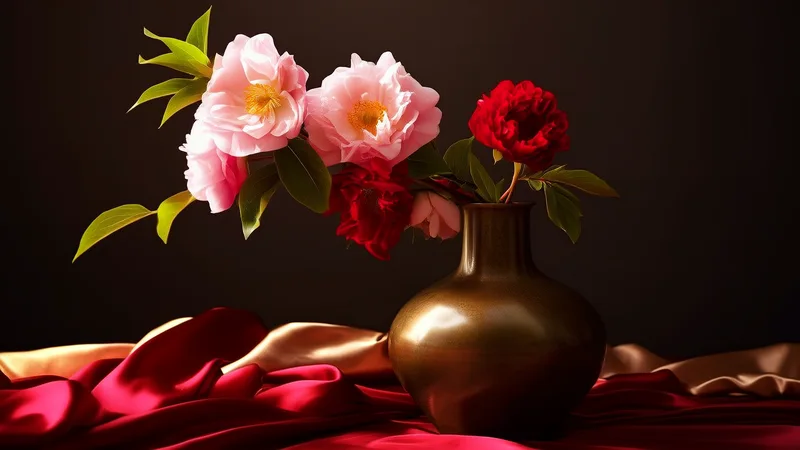
In traditional Chinese culture, the peach blossom has always meant something far more than a spring flower. For centuries, it has been used as a symbol of romance, attraction, and the energy surrounding love and relationships. From this rich cultural tradition emerged the concept of Peach Blossom Luck — known in Chinese as Tao Hua Yun (桃花运).
If you have ever heard someone described as someone who naturally attracts romantic attention, or noticed that certain periods of life seem to bring more romantic opportunities than others, you are already familiar with the basic idea. Traditional Chinese astrology and feng shui took this observation further — and built an entire system around it.
This article explores what Peach Blossom Luck actually means, where it comes from, how it is calculated, and what the tradition warns about when romantic energy goes too far.
The Origin of Peach Blossom Symbolism
The peach blossom has been celebrated in Chinese literature and art for thousands of years. When a peach tree bursts into bloom each spring, it transforms the landscape with clouds of delicate pink flowers. The appearance is temporary, beautiful, and associated with new beginnings.
These qualities made the peach blossom a natural symbol for romantic attraction. Like a flower in bloom, romantic opportunity can be vivid and fleeting. Like springtime itself, it represents renewal and the possibility of something new.
Over time, tao hua (peach blossom) became a shorthand in Chinese culture for romantic opportunity more broadly. Someone with strong Tao Hua Yun was understood to be in a period where love and attraction would come more easily.
The Astrology Behind Peach Blossom Luck
Traditional Chinese astrology assigns Peach Blossom energy to four specific Earthly Branches — the system of twelve symbols used in Chinese calendar and astrology alongside the Heavenly Stems.
The four Earthly Branches associated with Peach Blossom are:
- Zi — the Rat branch, associated with Water
- Wu — the Horse branch, associated with Fire
- Mao — the Rabbit branch, associated with Wood
- You — the Rooster branch, associated with Metal
When one or more of these branches appears in a person's birth chart — particularly in the day or hour position — traditional practitioners consider that person to have notable Peach Blossom energy in their chart.
This is a traditional cultural and metaphysical framework, not a scientifically validated system. Think of it as a fascinating lens through which generations of Chinese people have tried to understand romantic personality and relationship tendencies.
What Does "Having Peach Blossom Luck" Mean?
Someone described as having strong Peach Blossom Luck is traditionally understood to be:
- More naturally attractive to others in social situations
- More likely to encounter romantic opportunities during certain periods
- More emotionally expressive and socially active
- More likely to form connections quickly with new people
Of course, this is cultural interpretation, not psychological diagnosis. Real personality is far more complex than any astrological framework can capture. But the interesting thing about Peach Blossom Luck is that it doesn't simply describe a fixed personality trait — it also describes timing.
According to traditional astrology, romantic energy can be stronger during certain years, months, days, and even hours. This is why people sometimes speak of being "in" their Peach Blossom period — it implies a time when romantic opportunities are particularly active.
Internal vs. External Peach Blossom
One of the most sophisticated distinctions in traditional Peach Blossom analysis is between two different types:
Internal Peach Blossom (In-Chart Peach Blossom)
This refers to Peach Blossom energy that is part of the person's original birth chart. It is considered a fundamental aspect of their romantic personality — they tend to be naturally attractive, emotionally expressive, and comfortable in relationship contexts. Traditional astrology often sees this as favorable, especially for personal relationships.
External Peach Blossom (Year-Pillar Peach Blossom)
This refers to Peach Blossom energy that arrives during a particular year or period — not from the person's birth chart, but from the calendar itself. This type is viewed more cautiously, particularly for people already in committed relationships. An influx of romantic attention during an external Peach Blossom period can, according to tradition, create temptation, complications, or emotional instability.
This distinction reveals something interesting about traditional Chinese culture: more romantic attention is not automatically considered a good thing. The quality and context of romantic energy matter just as much as the quantity.
The Four Peach Blossom Time Periods
Traditional Chinese astrology also connects Peach Blossom energy with specific times of day, associating each with a different quality of romantic experience:
| Hour | Time | Element | Traditional Character |
|---|---|---|---|
| Zi Hour (Rat) | 11 PM – 1 AM | Water | Emotional, sensitive, deeply romantic |
| Mao Hour (Rabbit) | 5 AM – 7 AM | Wood | Rational but persistent in love |
| Wu Hour (Horse) | 11 AM – 1 PM | Fire | Passionate, energetic, intensely expressive |
| You Hour (Rooster) | 5 PM – 7 PM | Metal | Loyal, committed, generous in relationships |
These time associations are part of the broader symbolic language of Chinese metaphysics. They should be appreciated as cultural poetry rather than predictive science.
When Peach Blossom Luck Turns Negative: Tao Hua Jie
Traditional Chinese astrology does not treat Peach Blossom Luck as uniformly positive. When romantic energy becomes excessive or unwise, it can lead to what is called Peach Blossom Trouble — Tao Hua Jie (桃花劫).
Traditional texts associate several warning signs with problematic Peach Blossom energy:
- Romantic relationships leading to financial loss
- Emotional entanglements that create social problems
- Attraction to unsuitable partners despite warning signs
- Impulsive decisions driven by romantic feelings
- Relationships that damage existing commitments or family stability
The traditional interpretation for men and women sometimes differs in these classical texts. For men, Peach Blossom Trouble was often associated with financial consequences — wealth lost through inappropriate romantic relationships. For women, it was more often associated with emotional conflict and complicated relationship situations.
Modern readers will recognize these patterns without needing any astrology. Romantic decisions do have real-world consequences. The warning buried in the concept of Peach Blossom Trouble is timeless: attraction does not suspend judgment.
How Peach Blossom Luck Connects to Feng Shui
While Peach Blossom Luck primarily belongs to Chinese astrology (particularly the Four Pillars of Destiny, or Bazi), it also connects to feng shui through the concept of the Peach Blossom direction.
According to traditional feng shui, each Chinese zodiac group has a specific compass direction associated with romantic energy:
| Zodiac Group | Peach Blossom Direction |
|---|---|
| Tiger, Horse, Dog | East |
| Pig, Rabbit, Goat | North |
| Monkey, Rat, Dragon | West |
| Snake, Rooster, Ox | South |
Placing fresh flowers, meaningful decorations, or romantic symbols in the Peach Blossom direction is a traditional practice said to enhance romantic energy in the home. Whether this has any measurable effect is a matter of personal belief — but the practice of thoughtfully arranging one's environment with romance in mind is, at minimum, a meaningful ritual.
A Modern Interpretation of Peach Blossom Luck
You don't need to accept traditional Chinese astrology literally to find Peach Blossom Luck meaningful. Think of it as a cultural framework for reflecting on romantic personality and timing.
When someone says they are in their "Peach Blossom period," the most useful modern interpretation might simply be: this is a time to be socially active, to open yourself to new connections, and to take care of how you present yourself to the world.
The behavioral implications are valuable regardless of the metaphysical framework. Spend more time with people. Attend social events. Improve your appearance. Be genuinely interested in others. These actions increase the probability of meaningful romantic connections — not because of cosmic forces, but because of the simple mathematics of human interaction.
Attraction is not commitment. Opportunity is not obligation. And destiny does not replace personal choice.
The healthiest way to engage with Peach Blossom Luck is as a cultural tradition that encourages self-awareness and positive social behavior — not as a predetermined romantic destiny.